| 7,000+ Reviews
 Free EU Shipping above 100€*
 400,000+ Customers Worldwide
 Worldwide Tracked Shipping


Liquid Chalk vs Powder Chalk: Which One Should You Use?
You're three reps into a muscle-up set and your hands start sliding off the bar. Chalk fixes that, but which kind? The liquid chalk vs powder chalk question comes up in calisthenics, weightlifting and bouldering alike, and the honest answer is that it depends on where you train and what you train. Here's what each one does, what it costs you in comfort and mess, and how to pick the right one for your sessions.
What chalk actually does for your grip
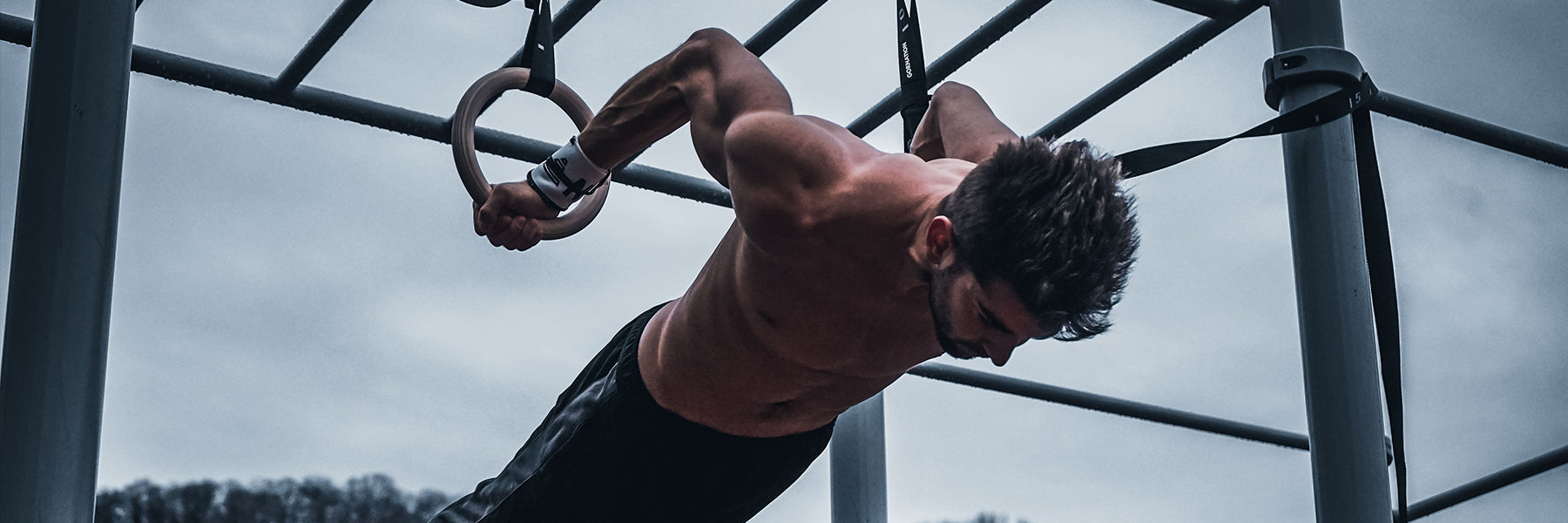
Chalk is magnesium carbonate. It absorbs the sweat on your palms and increases friction between your skin and the bar. That's it, and that's enough: a dry hand holds a bar far longer than a damp one. On pull ups, muscle ups or a long dead hang, your grip usually gives out before your back does, and a slipping hand ends the set early.
Chalk doesn't build grip strength, though. It buys you time on the bar so you can train properly. If your forearms are the limiting factor, our guide on how to improve grip strength covers the training side.
Liquid chalk: what you get
Liquid chalk is magnesium carbonate suspended in an alcohol base. You apply it, the alcohol evaporates in a few seconds and a thin, even layer of chalk stays on your skin.

The main advantage is that it doesn't spread dust. Nothing lands on the floor, the bars or your clothes, which is why it's the version most commercial gyms accept without complaint. The layer also lasts longer than loose powder: one application usually carries you through several sets, so you don't have to break a long combo to re-chalk.
The trade-off is your skin. The alcohol dries your hands, and frequent use on top of hard training leads to cracked palms if you don't take care of them. Hand cream after your session handles it. A bottle also costs more per use than loose powder, and the cap needs to be closed properly or the opening clogs.
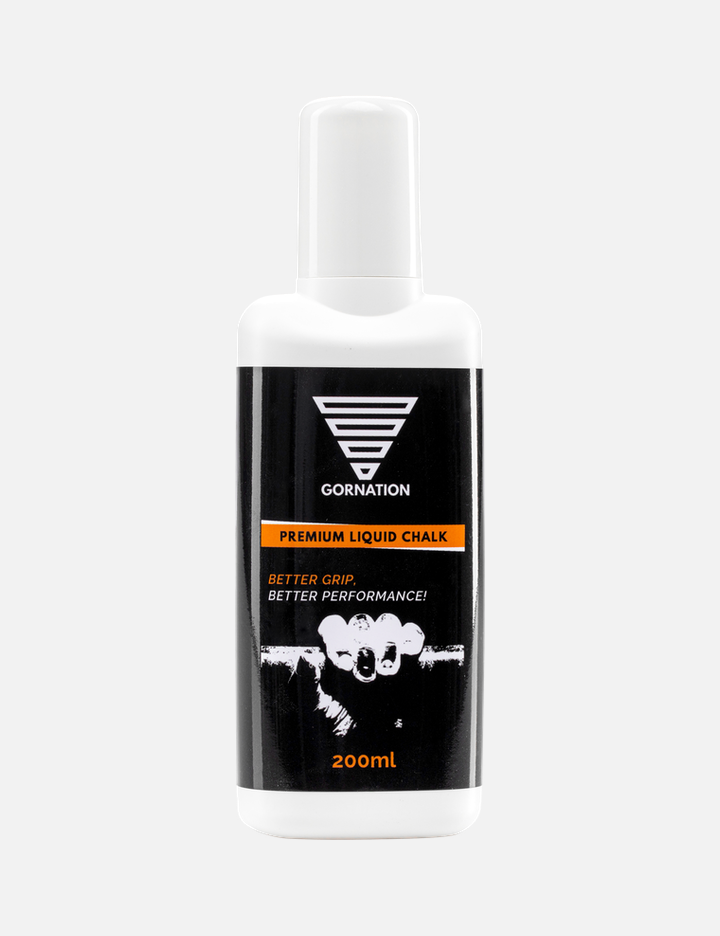
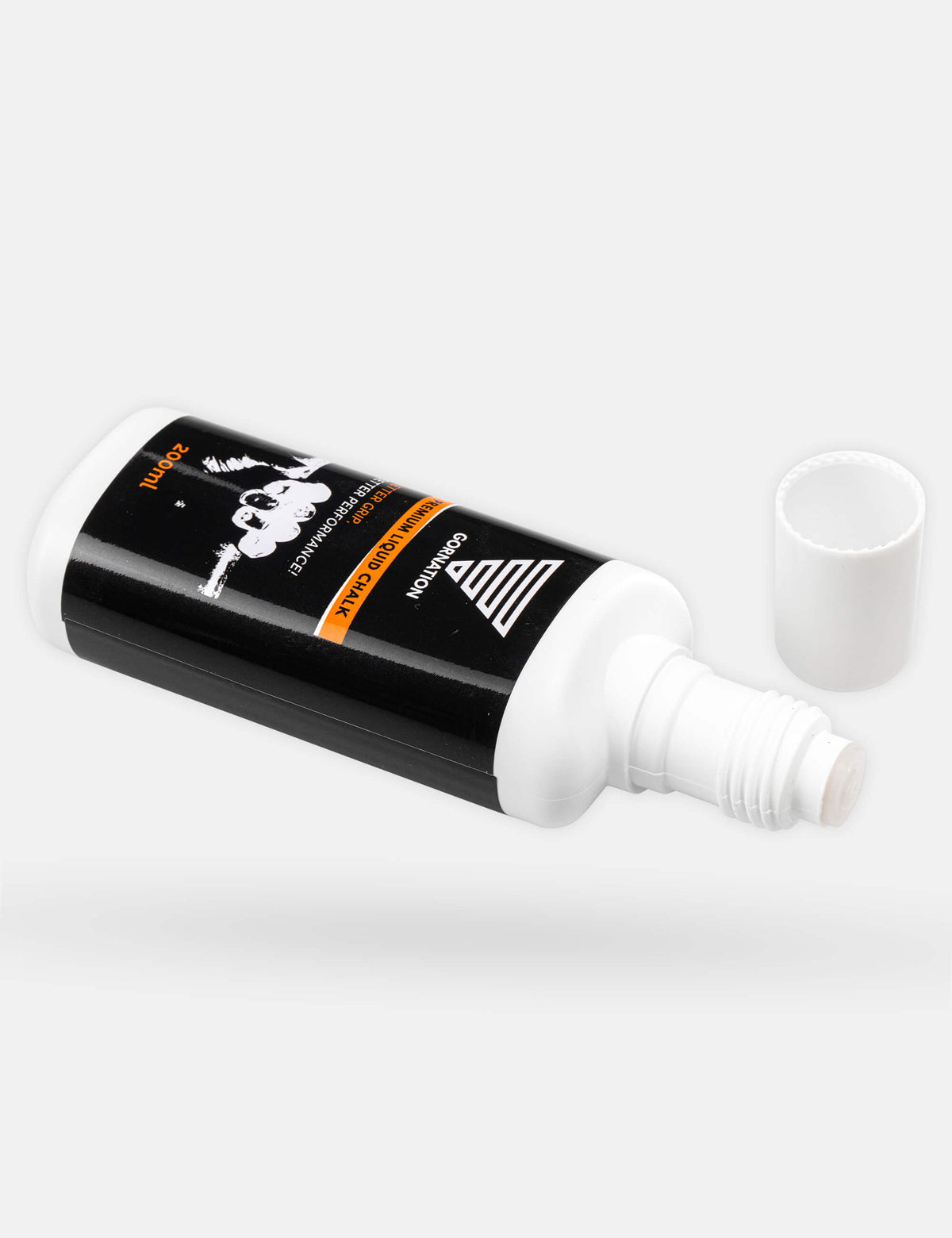
The GORNATION Premium Liquid Chalk comes in a 200 ml bottle with an airtight cap, dries in seconds and, with regular use, lasts 2 to 5 months. To apply it: shake the bottle, put a small amount in your palm, spread it over both hands including your fingers, and let it dry for a few seconds before you grab the bar. Reapply after several sets if you need to, and wash your hands with soap and water afterwards.
Powder chalk: what you get
Loose powder is the classic option. You dip your hands in the bag, rub them together and go. It's the cheapest chalk per application and it lasts a long time.
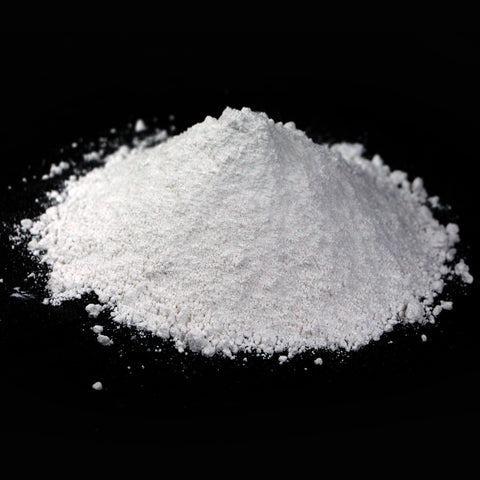
It's also gentler on your skin, since there's no alcohol involved. The grip it gives is slightly less aggressive than liquid chalk, which some athletes prefer: on high-rep sets you can still slide your hands along the bar to adjust your grip instead of being glued in place.
The downside is the dust. It settles on the floor, on the equipment and on everything around you, and plenty of gyms ban loose powder for exactly that reason. The layer also comes off faster, so you'll re-chalk between sets, which is a problem mid-combo rather than between sets of pull ups.
One niche advantage worth mentioning: for photo and video sessions, a clap of powder chalk gives you that cloud of white dust that liquid chalk simply can't produce.
Chalk blocks: the middle option
Blocks are pressed magnesia cubes, and they sit between the two. You rub your hands directly on a block, or break off a piece and crush it in your palms, which gives you the feel of powder with far less dust flying around than a loose bag.
The GORNATION Premium Chalk Blocks come as 56 g blocks in a large resealable bag, in packs of 4, 8 or 12, and a bag lasts 4 to 6 months depending on how often you train. Reapply after a few sets when you feel your grip going.
Liquid chalk vs powder chalk: the comparison
| Criteria | Liquid chalk | Powder chalk | Chalk blocks |
|---|---|---|---|
| Dust | None | A lot | Moderate |
| How long one application lasts | Several sets | One to two sets | A few sets |
| Skin comfort | Drying, use hand cream | Gentle | Gentle |
| Transport | Easy, sealed bottle | Messy without a chalk bag | Easy, resealable bag |
| Cost per session | Higher | Lowest | Low |
| Accepted in commercial gyms | Almost always | Often banned | Usually fine |
| Best for | Long combos, competitions, indoor gyms | Home and outdoor training, photo sessions | All-round training |
Which one should you use?
Match the chalk to the session rather than looking for a single winner.
Freestyle calisthenics and long combos: liquid chalk. When you chain skills for 30 to 60 seconds, you can't stop to re-chalk, and losing your grip halfway through a combo costs you the whole set. One application before you start is enough.
Strength work and statics: either one works. For heavy weighted pull ups or a front lever hold, you have time between sets to re-chalk, so powder or blocks do the job at a lower cost.
Handstand and floor work: keep it light. A thin layer is enough for a handstand on parallettes, and too much chalk on a smooth surface can make your hands slide rather than stick.
Training in a commercial gym: liquid chalk, almost always. Check the rules first, but a chalk that leaves nothing on the floor rarely causes a problem.
Training outdoors or at home: whatever you prefer. There's no one to bother, so cost and skin comfort decide.
Many athletes keep both: liquid chalk in the gym bag, a bag of blocks at home. You'll find all of them in our chalk, tape and grips collection.
Getting the most out of your chalk
- Start with clean, dry hands. Chalk on top of sweat turns into paste and does nothing for your grip.
- Use less than you think. A thick layer doesn't grip better, it just flakes off on the bar.
- Cover your fingers, not just your palms. Your fingers do most of the holding on a bar.
- Wash it off after training with soap and water, then use a hand cream to keep your skin from cracking.
- File down your calluses regularly. Chalk plus a thick callus is how skin tears start.
Chalk fixes sweat, not joint stress. If your wrists take a beating on heavy pushing or handstand work, our article on why you should use wrist wraps covers what chalk can't do.
FAQ: liquid chalk vs powder chalk
Is liquid chalk better than powder chalk?
It's better in the situations that matter most in calisthenics: no dust, and one application lasts through several sets or a long combo. Powder chalk is cheaper, gentler on the skin and perfectly fine for strength work where you can re-chalk between sets. Neither one is stronger than the other in terms of raw grip.
How long does a bottle of liquid chalk last?
The GORNATION Premium Liquid Chalk comes in a 200 ml bottle that lasts 2 to 5 months with regular use, depending on how often you train and how much you apply each time. Keep the cap closed tightly between sessions so the formula doesn't dry out and the opening doesn't clog.
Does liquid chalk damage your hands?
The alcohol in liquid chalk dries out your skin, and repeated use without care leads to cracked palms. Wash your hands after training, apply a hand cream, and file down your calluses regularly. With that routine, most athletes use liquid chalk year-round without any skin problems.
Can you use chalk for bouldering and weightlifting too?
Yes. Chalk works the same way in every sport where your hands hold something: it absorbs sweat and increases friction. Bouldering, weightlifting, gymnastics and calisthenics all use it. Check your gym's rules first, since climbing halls and commercial gyms often allow liquid chalk but ban loose powder.
What's the difference between chalk blocks and powder chalk?
Blocks are the same magnesia, pressed into cubes. You rub your hands on a block or crumble a piece in your palms, which gives you the grip and the skin comfort of powder while spreading much less dust around your training space.
Pick your chalk and get back on the bar
If you train in a gym or chain long combos, go liquid. If you train at home or outdoors and want the cheapest option, go powder or blocks. Either way, chalk only pays off if your grip training and your skin care follow. Browse the GORNATION equipment range and set up your sessions properly.