| 7,000+ Reviews
 Free EU Shipping above 100€*
 400,000+ Customers Worldwide
 Worldwide Tracked Shipping


A bar screwed into your wall or ceiling is the cheapest upgrade your training will ever get. No gym, no commute, and enough movements to build your back, arms and core for years. These 8 pull up bar exercises take you from your first assisted rep to L-sit pull ups, and they all work on the GORNATION Pull Up Bar Uni and Pull Up Bar Multi at home.
Which GORNATION pull up bar should you choose?
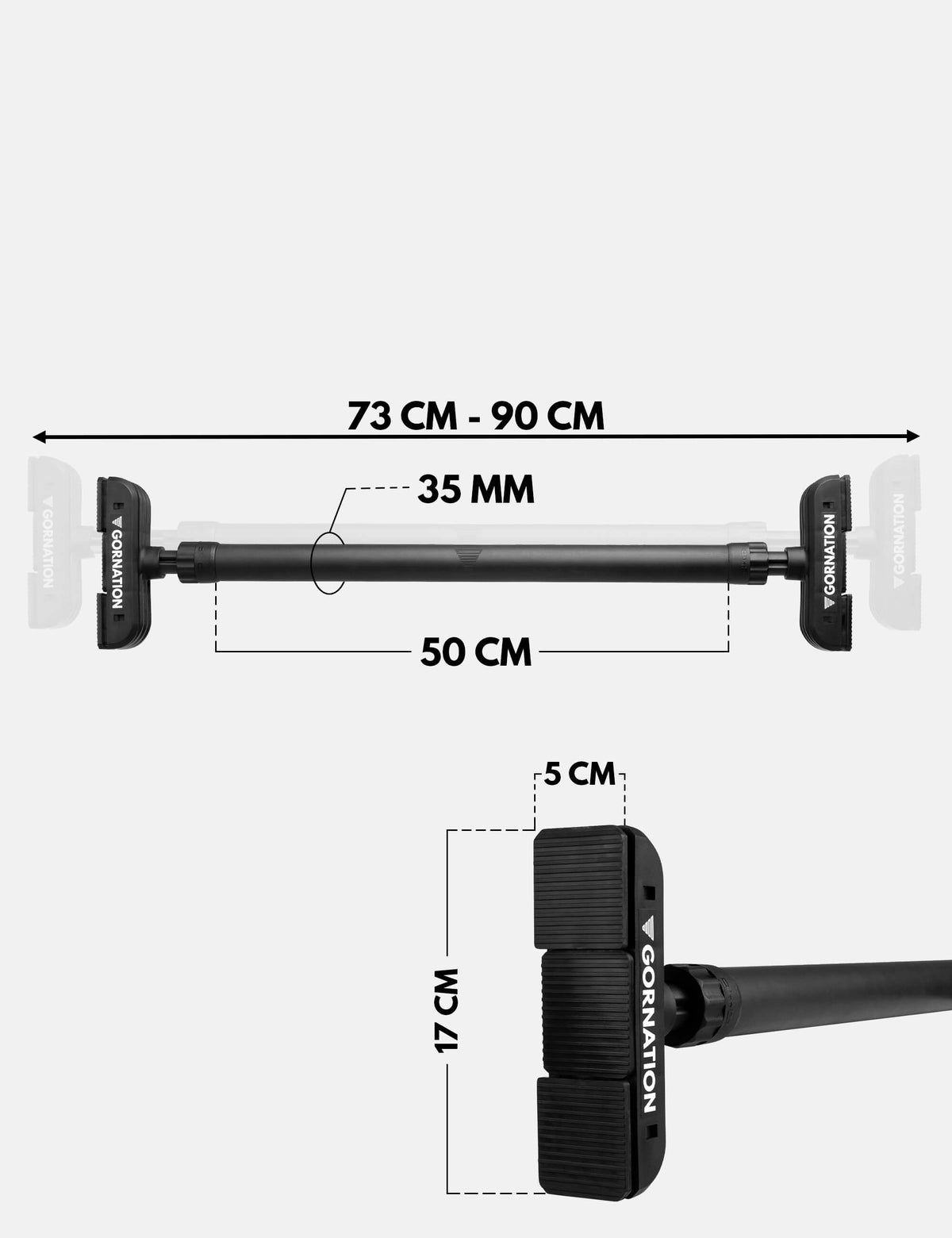
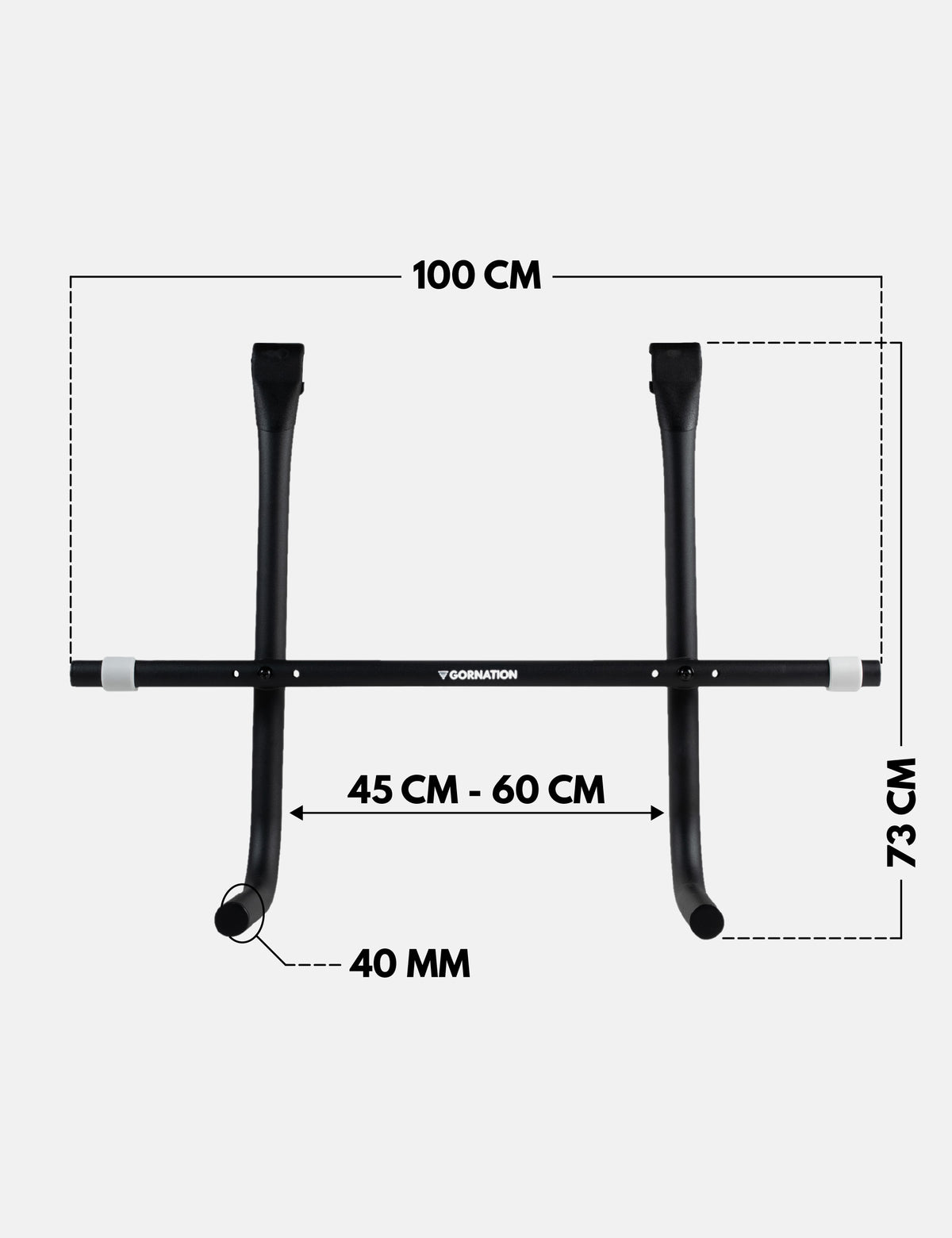
Both bars are made of powder-coated steel with a 32 mm matte grip and measure 96.4 cm across. The difference is the clearance, and the clearance decides what you can train.
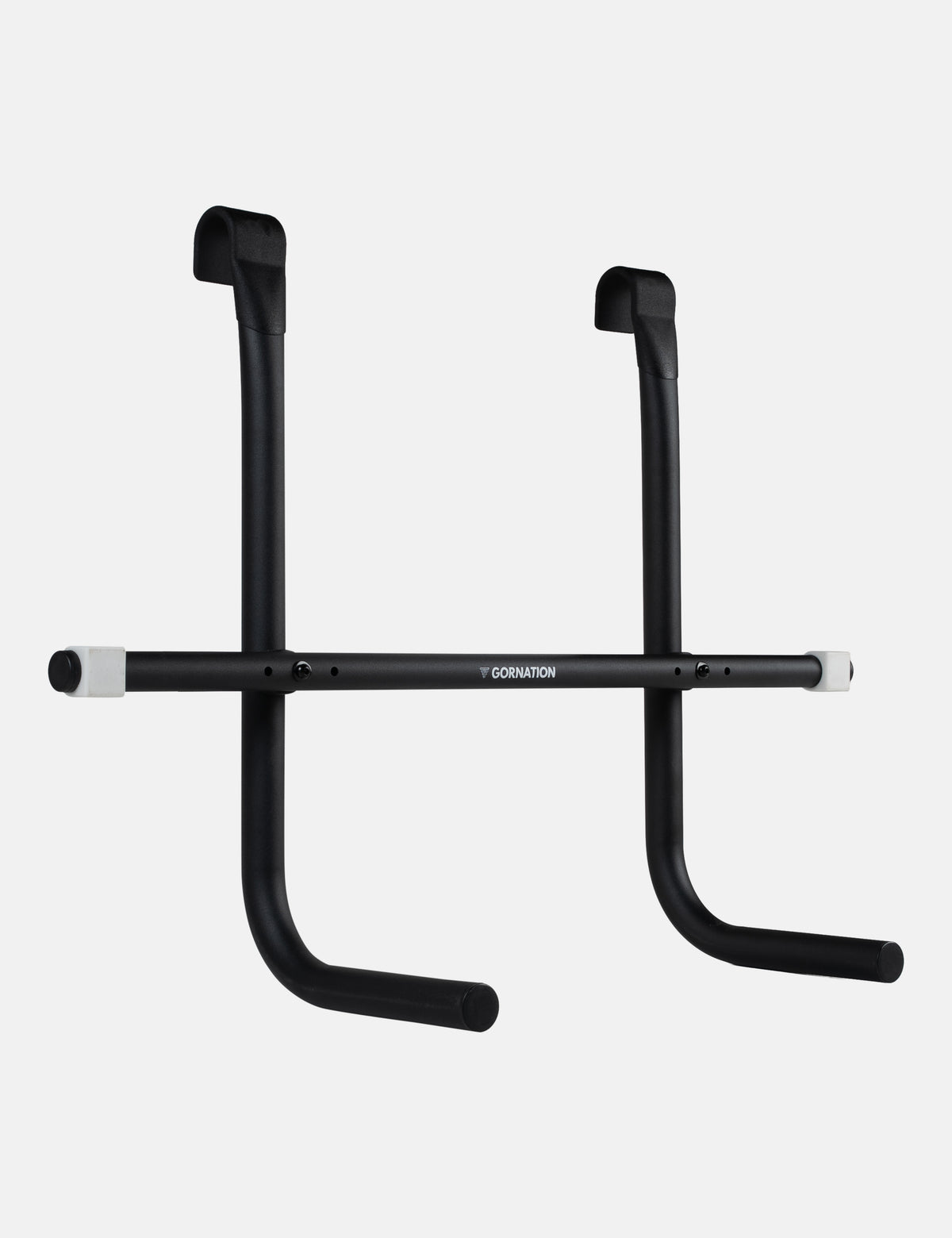
The Doorway Pull Up Bar Uni sits 15 cm from the surface and holds up to 200 kg. It mounts in a doorway, a hallway or on a beam, on concrete, brick or wood, and its compact footprint suits flats and small rooms. That clearance is enough to hang without scraping the wall.
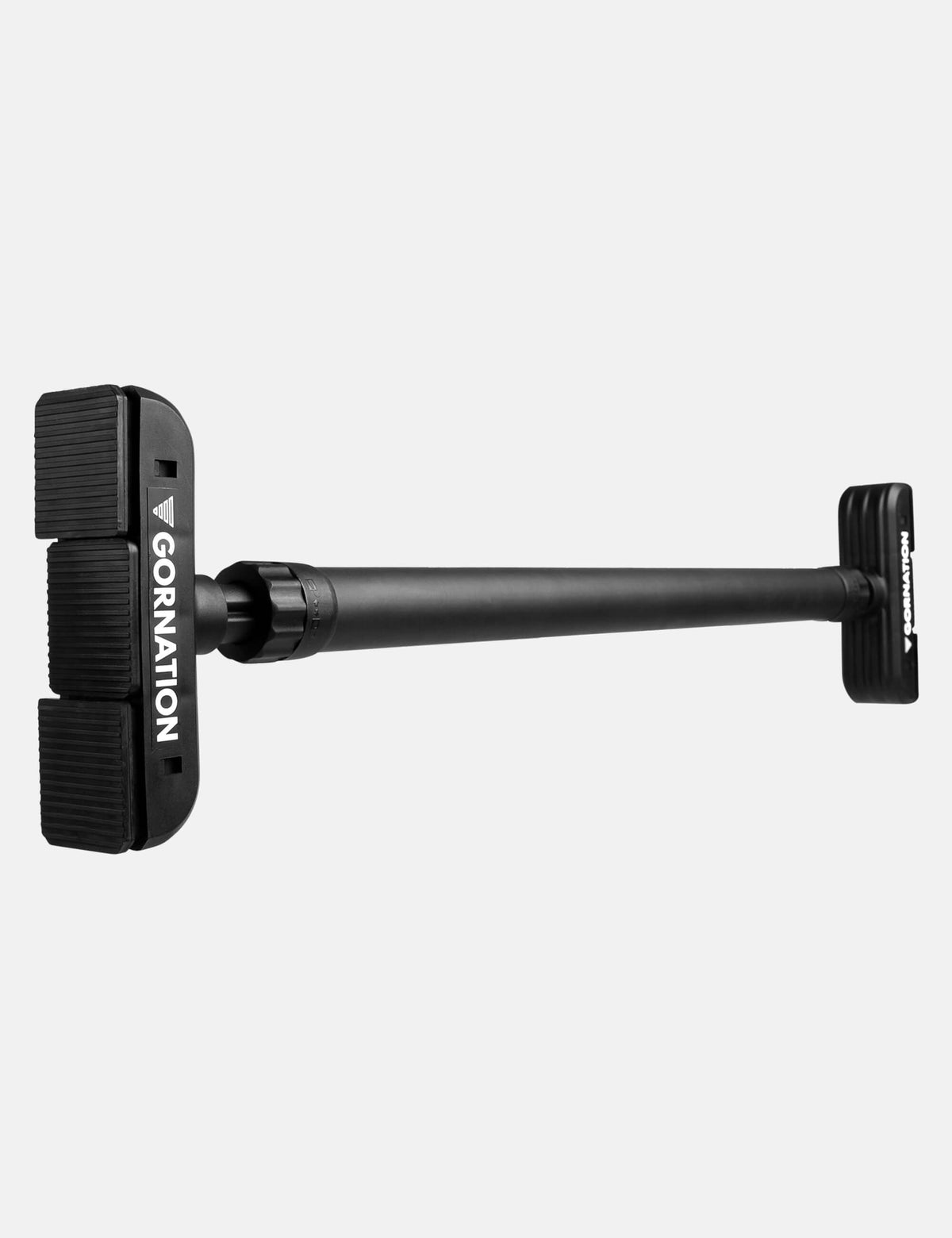
The Ceiling Pull Up Bar Multi comes in three pieces and gives you 30 cm of clearance, on the wall or on the ceiling. It holds 200 kg mounted on a ceiling and 120 kg on a wall. The extra space is what you want for leg raises, front levers and anything where your body swings under the bar. Both bars ship with Fischer DuoPower wall plugs, screws for wood, concrete or brick, an assembly wrench and instructions, and both carry a 2-year warranty.
8 pull up bar exercises for your back, arms and core
The list runs from the basics to the harder variations. Get your form clean before you move on: a strict rep on a bar builds more than three sloppy ones.
1. Pull-ups
The pull up is the reference pulling exercise. Grip the bar with your palms facing away, hands roughly shoulder-width apart. Pull your shoulder blades down before you bend your arms, then pull until your chin clears the bar and lower yourself under control to straight arms. No kicking, no swinging.
Muscles worked: lats and mid-back, biceps, rear delts, with your core keeping the body still.

2. Leg raises
The hanging leg raise is the core exercise of the list. Hang from the bar with straight arms and shoulders active, then lift your legs until they're parallel to the floor, knees straight. Lower them slowly without letting your body swing. Too hard? Do it with your knees tucked first.
Muscles worked: abs and hip flexors, plus your grip and shoulders from the hang. This is what builds the compression strength the L-sit needs.

3. Chin-ups
Same movement as the pull up, palms facing you, hands shoulder-width apart. The supinated grip puts your biceps in a stronger position, so most people manage more chin-ups than pull ups. Keep your elbows close to your body and pull your chest toward the bar rather than just your chin over it.
Muscles worked: biceps first, then lats and mid-back. A good way to train pulling volume when your pull ups are already fried.

4. Assisted pull-ups with a resistance band
Can't do a full rep yet? The assisted pull up is how you get there. Loop a band over the bar, pull the end through itself and put one foot or one knee in the loop. The band pushes hardest at the bottom, exactly where the movement is hardest.
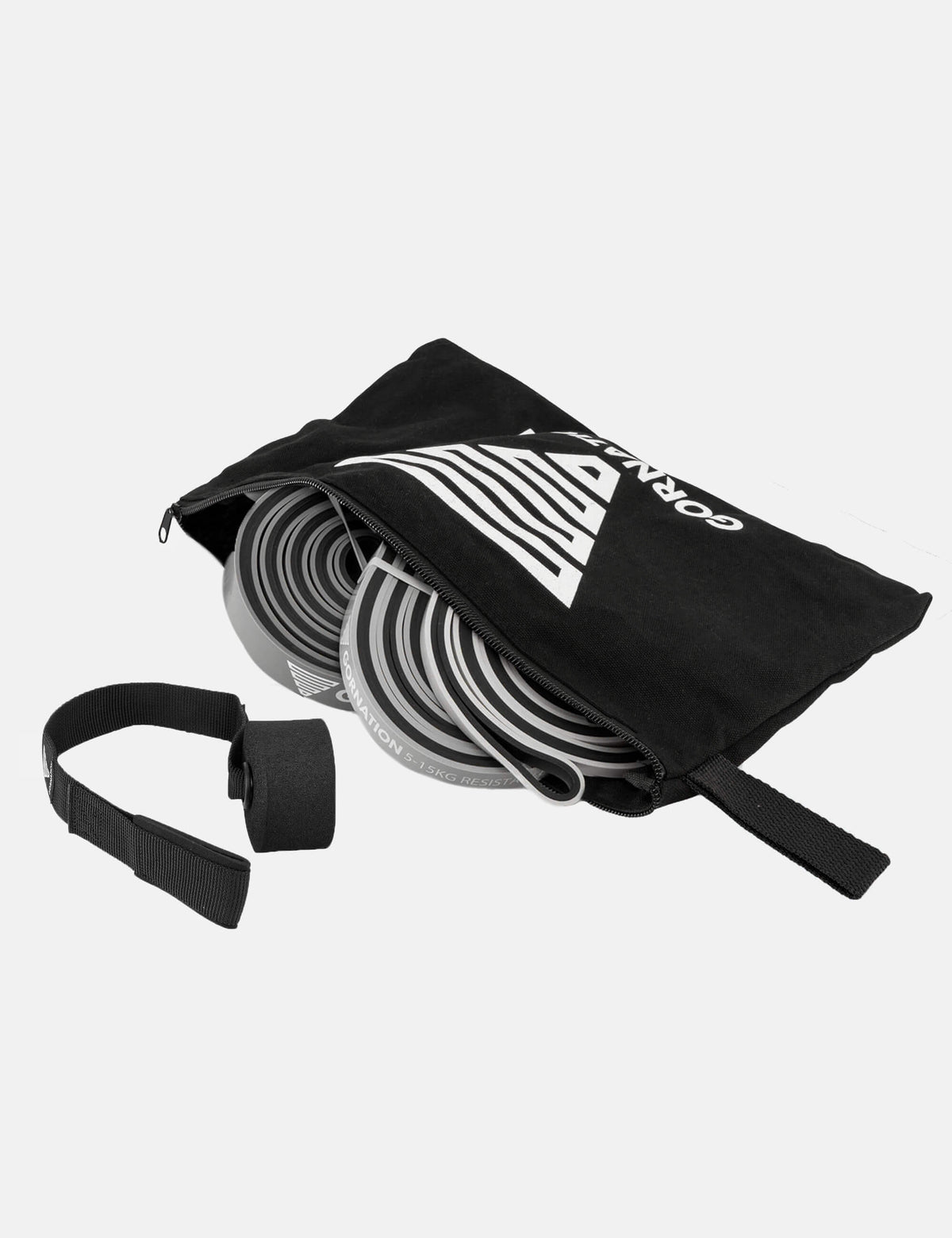
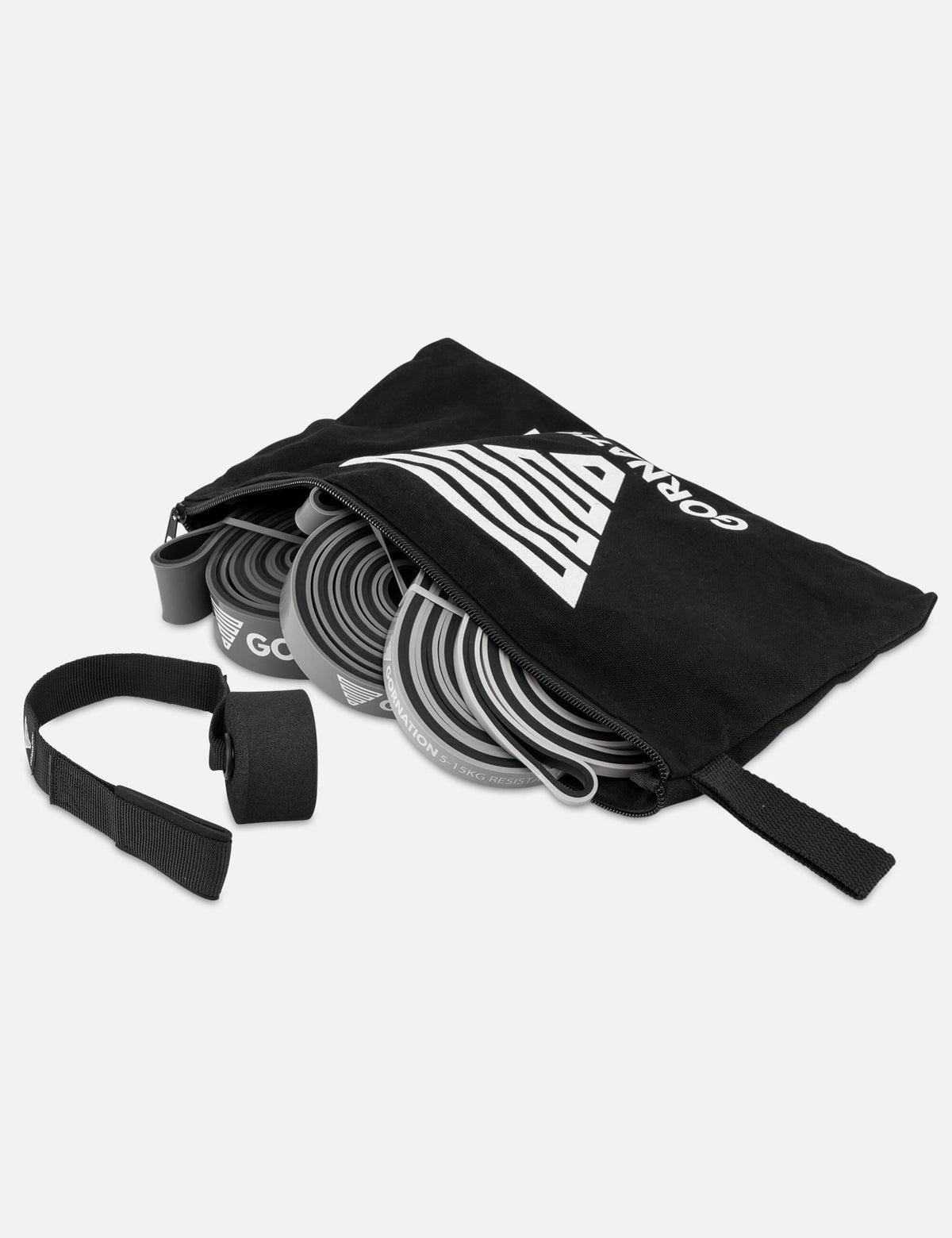
The GORNATION Premium Resistance Bands come in four strengths, from Ultra Light (2-7 kg) to Heavy (20-40 kg). Pick the band that gives you 5 to 8 clean reps, then switch to a lighter one as you get stronger. That's your progression to your first unassisted pull up.
Muscles worked: the same as the pull up, with part of your bodyweight taken off.
5. Ring push-ups
Hang rings from your bar and the push-up turns into a stability exercise: nothing holds the rings in place, so your shoulders and core work to keep them still. Set the rings low, get into a plank with straight arms, lower your chest between the rings and press back up. Keep the rings from drifting apart at the bottom.
The GORNATION Workout Rings Set uses 18 cm birch rings on 4.5 m straps holding up to 150 kg per side, with sewn length markings so both rings sit at the same height. See the ring push up page for the full technique.
Muscles worked: chest, triceps and front delts, with heavy core and shoulder stabilisation.
6. Australian pull-ups with rings
The ring australian pull up is the horizontal row of calisthenics, and the best entry point if full pull ups are still out of reach. Set the rings low, grab them and lean back with your body straight from head to heels. Pull your chest to the rings, squeeze your shoulder blades together, then lower under control. The more horizontal your body, the harder it gets.
Muscles worked: mid-back and rhomboids, biceps, rear delts, with the core holding the plank position.

7. Mixed grip pull-ups
One palm facing you, one facing away. The asymmetry loads each arm differently and forces your core to fight the rotation, which makes it a useful variation once standard pull ups feel routine. Swap the grip every set so you don't build an imbalance, and keep your shoulders square to the bar.
Muscles worked: lats and biceps, with extra obliques and grip work from the anti-rotation.
8. L-sit pull-ups
The L-sit pull up combines the two halves of this list: you hold your legs at 90 degrees while you pull. Get into the L-sit hang first, keep the legs locked and toes pointed, then pull until your chin clears the bar without letting the legs drop. The 30 cm clearance of the Multi is welcome here, since your legs stay well in front of your body.
Muscles worked: lats, biceps, abs and hip flexors at the same time. Start with 3 reps, they're worth more than 10 regular pull ups.
A simple weekly plan with your pull up bar
Train pulling 2 to 3 times a week, with a rest day in between. Pick your level and move up when you hit the goal in the last column.
| Level | Exercises | Sets and reps | Move up when |
|---|---|---|---|
| Beginner | Assisted pull ups, australian pull ups, tucked leg raises | 3 x 5-8, 3 x 8-12, 3 x 10 | You get 3 clean unassisted pull ups |
| Intermediate | Pull ups, chin-ups, hanging leg raises, ring push-ups | 4 x 5-10, 3 x 6-10, 3 x 8-12, 3 x 8-12 | You get 10 clean pull ups in a row |
| Advanced | L-sit pull ups, mixed grip pull ups, weighted pull ups | 4 x 3-5, 3 x 6-8, 5 x 3-6 | Keep adding load or harder variations |
Once bodyweight pull ups get easy, adding load is the next step: our guide on weighted pull ups covers it.
Accessories that help on the bar
- Wrist wraps: support for your wrists on heavy and static work.
- Chalk: absorbs sweat so your hands stop sliding on the bar.
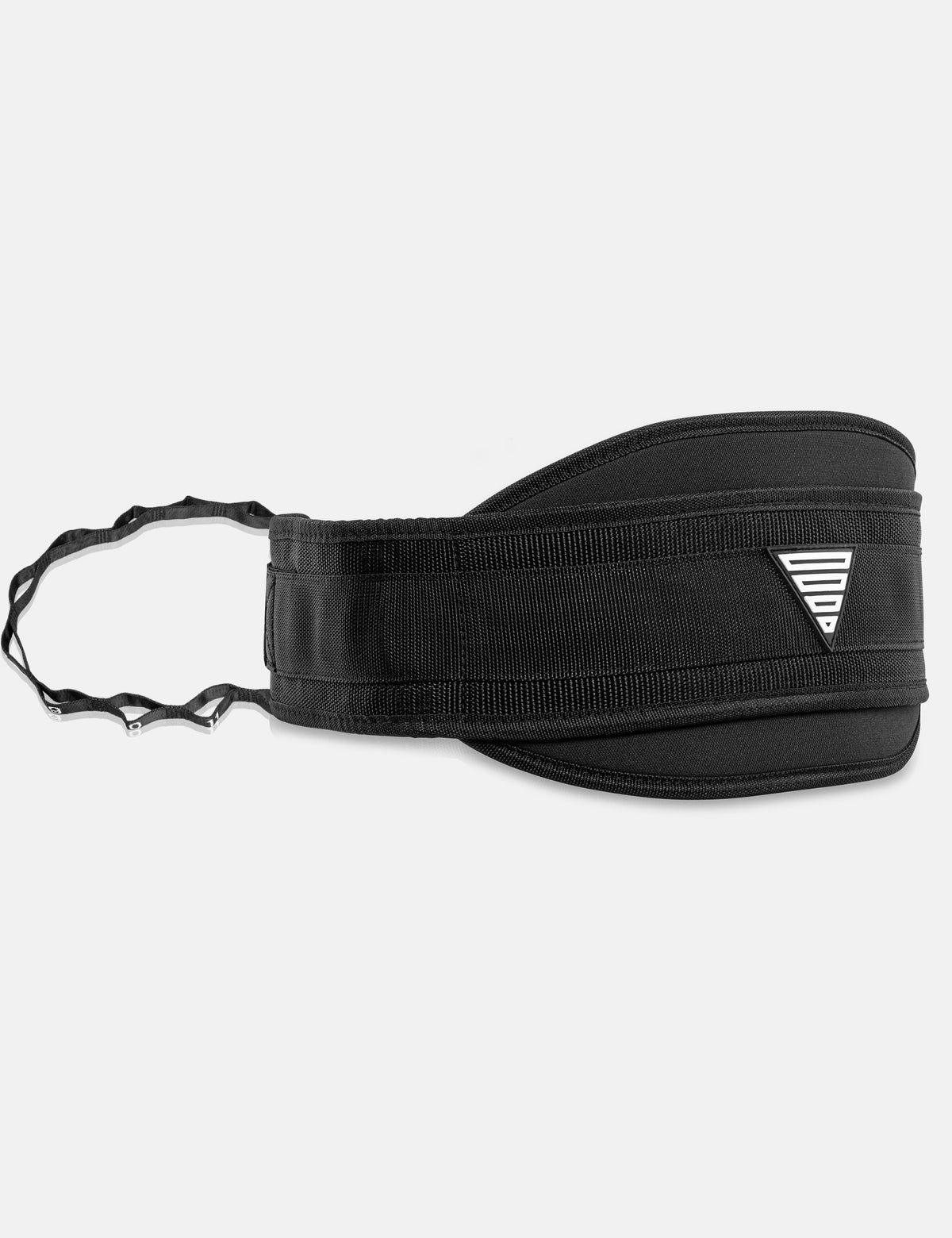
- Weight vest: extra load spread across your torso for pull ups and leg raises.
FAQ: pull up bar exercises
Which pull up bar should you pick for a flat?
The Doorway Pull Up Bar Uni, with its 15 cm clearance and 15 x 8 cm mounting plates, fits doorways and hallways where space is tight. If you have a solid ceiling and want room to swing your legs, the Ceiling Pull Up Bar Multi gives you 30 cm of clearance and opens up leg raises and front levers.
How much weight can a GORNATION pull up bar hold?
The Doorway Pull Up Bar Uni holds up to 200 kg. The Ceiling Pull Up Bar Multi holds 200 kg mounted on a ceiling and 120 kg mounted on a wall. Both come with Fischer DuoPower plugs and screws for wood, concrete or brick, and the mounting surface matters as much as the bar itself.
How do you do your first pull up?
Train assisted pull ups with a resistance band, australian pull ups and negatives, where you jump to the top and lower yourself as slowly as possible. Three sessions a week, 3 to 4 sets each, and most beginners get their first rep within a couple of months.
How often should you train on a pull up bar?
Two to three sessions a week suits most people, with at least one rest day between them so your elbows and shoulders recover. Hanging work is demanding on the grip and the connective tissue, so quality beats frequency here.
Can you train your abs on a pull up bar?
Yes, and it's one of the best places to do it. Hanging leg raises, knee raises and L-sit hangs load your abs and hip flexors while your grip and shoulders work to keep you steady. Two or three sets at the end of a pulling session are enough.
Put your pull up bar to work
Eight exercises, one bar, and enough progression to keep you busy for a year. Start where you are, add a rep or a harder variation each week, and let the bar do the rest. Find your pull up bar and train at home this week.
Want to see the Ceiling Pull Up Bar Multi in action and a few more exercises? Watch the video on our YouTube channel.