| 8,000+ Reviews
 Free EU Shipping above 100€*
 400,000+ Customers Worldwide
 Worldwide Tracked Shipping


You can train calisthenics with nothing but a pull-up bar, and plenty of people do. But at some point the same bar stops producing progress: your wrists complain on handstands, your hands rip before your back gives out, and the skill you're chasing needs an assistance you don't have. That's where calisthenics equipment earns its place. Here are 7 pieces that fix a real problem, what each one does, and the order to buy them in.
1. Workout rings
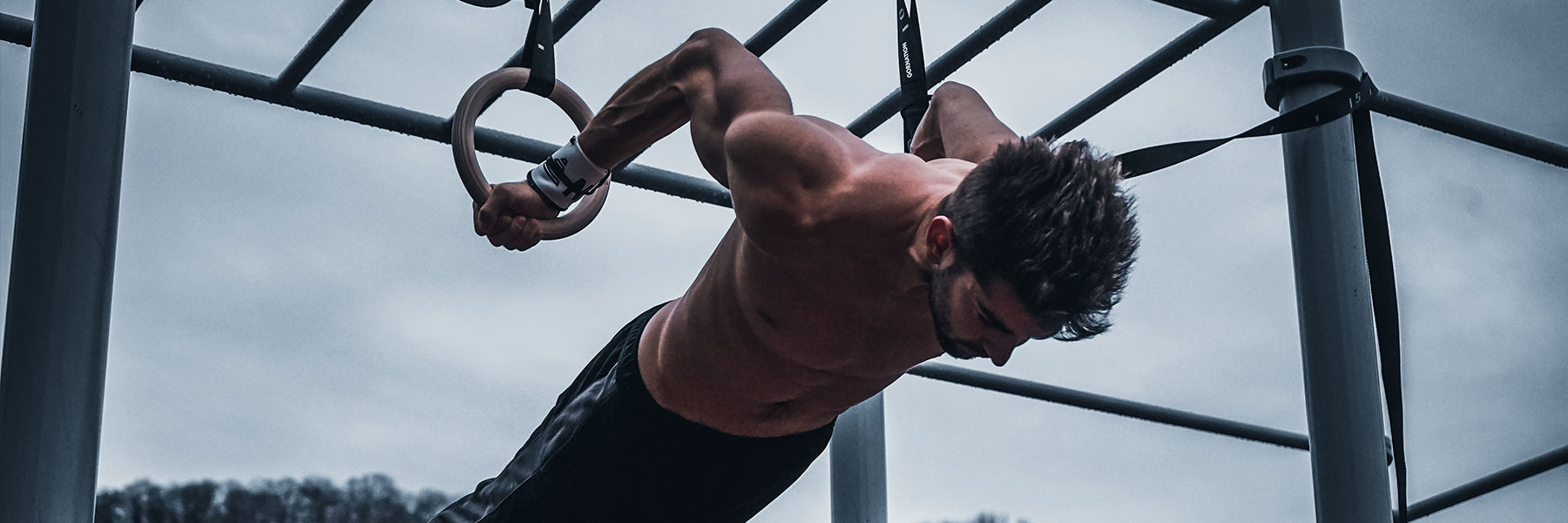
Rings turn every exercise into a stability exercise. Because nothing holds them in place, your shoulders and core work to keep the rings still while your arms do the pulling or pushing. A ring push up and a floor push up look alike and feel nothing alike.
The GORNATION Workout Rings Set uses 18 cm rings in 100% birch wood, 2.8 cm thick, on 4.5 m straps that hold up to 150 kg per side. The buckles adjust steplessly and the straps carry sewn length markings, so you get both rings to the same height in seconds instead of guessing. The set comes with a carry bag, which matters more than it sounds: rings are the one piece of equipment you can take to a park, a pull-up bar or a tree and be set up in two minutes. At home, a door anchor or a ceiling anchor set gives you a fixed point.


Best for: pushing work, rows, dips and ring skills. Start with ring rows and ring push ups before you try dips on them.
2. Chalk
Sweaty hands end sets early. Chalk is magnesium carbonate: it absorbs the moisture on your palms and increases friction between your skin and the bar. On muscle ups or long hangs, that's often the difference between finishing your set and dropping off the bar with your back still fresh.
The GORNATION Premium Liquid Chalk comes in a 200 ml bottle with an airtight cap, dries in seconds and lasts 2 to 5 months with regular use. Shake it, spread a small amount over both hands including your fingers, let it dry, then grab the bar. Liquid chalk leaves no dust on the floor or the equipment, which is why most gyms accept it while loose powder is often banned. Wash it off with soap and water afterwards, and use a hand cream: the alcohol base dries out your skin.


Best for: anything where your hands hold your bodyweight. Also used in bouldering, weightlifting, gymnastics and CrossFit.
3. Parallettes
Parallettes lift your hands off the floor and put your wrists in a neutral position instead of bending them back. That single change makes push-ups deeper, handstands friendlier on the joints, and static skills possible: the L-sit and the planche are much harder to train with flat palms on the ground.
They're also the most portable piece on this list after chalk. Low parallettes fit in a backpack, tall ones give you room for leg-through movements and a deeper handstand descent. Pick the height according to what you train: low models for floor work and planche progressions, tall models for dips, L-sit work and handstand presses. You'll find both in the GORNATION parallettes collection.


Best for: push-ups, dips, L-sits, handstands and planche progressions, indoors or outdoors.
4. Wrist wraps
Your wrists carry your whole bodyweight in every handstand, planche and push-up, in a position they rarely see outside training. Wraps add support so the joint holds while you work on the skill. Our article on why you should use wrist wraps covers when they help and when they don't.
GORNATION makes two versions, and the difference is the length. The Performance Wrist Wraps are 95 cm long and 8 cm wide, with a silicone coating for grip: you keep your wrist mobility, which suits dynamic work, handstands and freestyle. The Power Wrist Wraps are 45 cm long with a hook-and-loop closure and a thumb loop, for maximum stability on heavy loads: weighted dips, weighted pull ups and streetlifting. Both are 80% polyester and 20% cotton, sold as a pair with a transport bag.


Best for: handstands, planche work and anything weighted. Wrap them for your working sets, not for your warm-up.
5. Elbow sleeves
Elbows are the joint that quietly accumulates damage in calisthenics. Straight-arm work, high-volume dips and weighted pushing all load the tendons around the joint, and the pain usually shows up after the session rather than during it.
The GORNATION Elbow Sleeves apply compression around the joint and support the forearm and upper arm attachments. They're made of 65% nylon, 30% polyester and 5% elastane, come in sizes S to XL and are sold as a pair with a carry pouch. Most athletes use them on pushing days, on dips, push-ups and planche work, but they also work for pull ups, muscle ups and streetlifting.


Best for: pushing sessions and heavy loads. Sleeves support the joint, they don't repair it: if pain persists, see a health professional.
6. Resistance bands
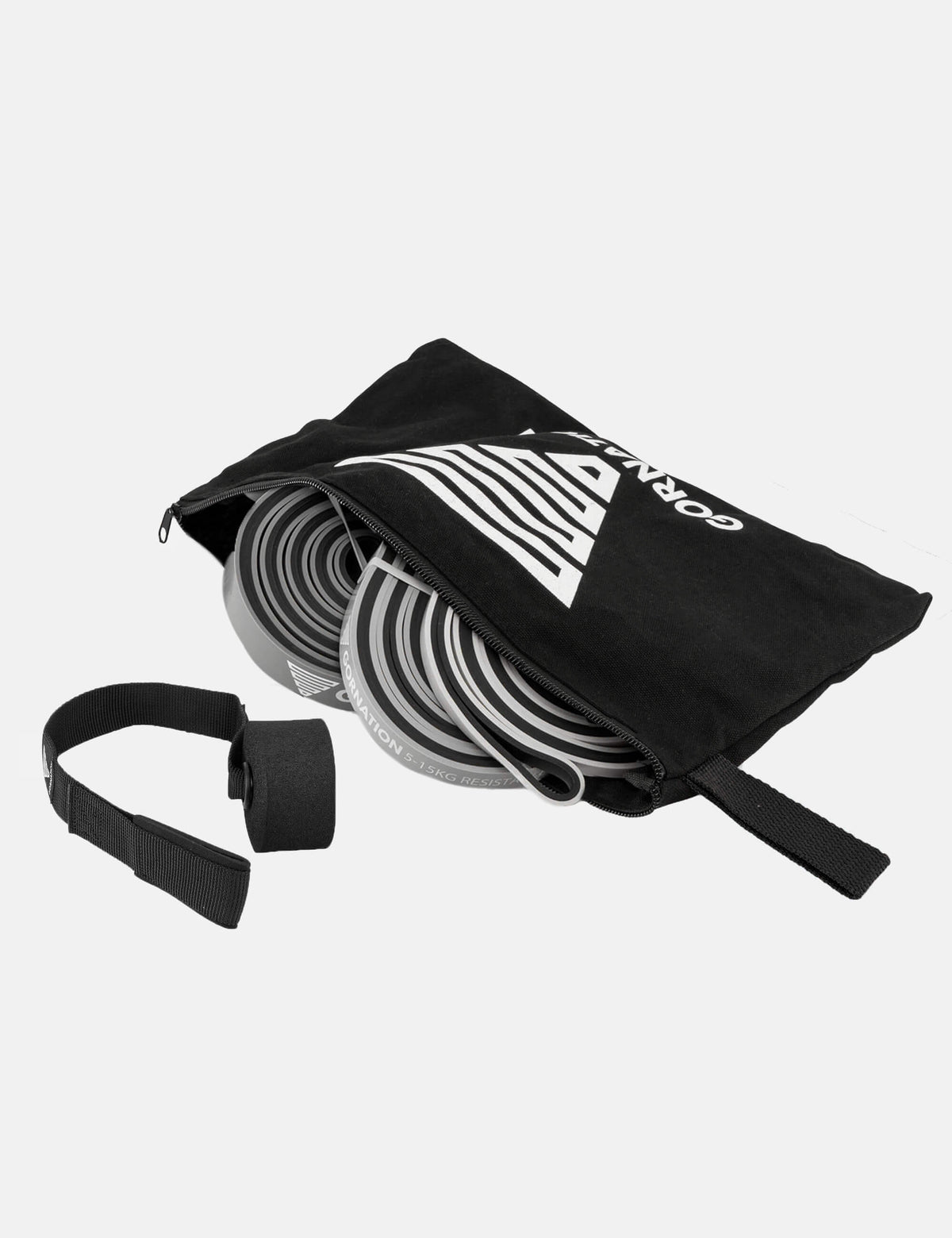
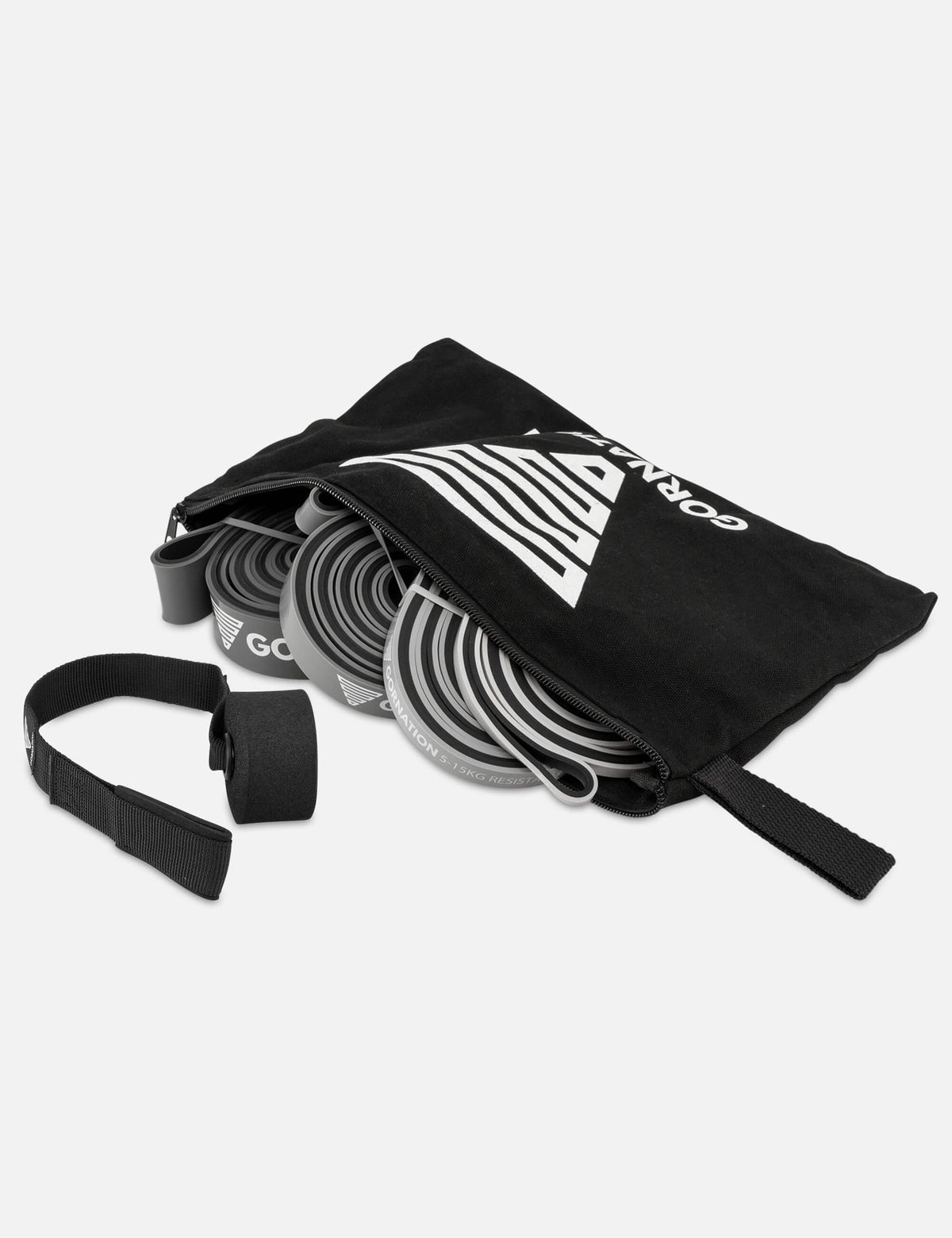
Bands are the only piece here that works in both directions. Loop one over the bar and step into it, and it removes part of your bodyweight so you can train an assisted pull up or a first muscle up with real reps. Hold it under your hands during push-ups and it adds resistance instead.
The GORNATION Premium Resistance Bands are 208 cm long, made of two-layer natural latex, and come in four strengths: Ultra Light (2-7 kg), Light (5-15 kg), Medium (10-30 kg) and Heavy (20-40 kg). Pick the band that lets you do 5 to 8 clean reps, then drop to a lighter one as you get stronger; that progression is the whole point. Bands are also the easiest tool for warming up your shoulders before a session and stretching after it.


Best for: learning pull ups, muscle ups and front levers, adding resistance to squats and push-ups, warming up and stretching.
7. Workout grips
High-volume bar work destroys the skin at the base of your fingers. Grips put a layer of leather between your palm and the bar, so the session ends when your muscles are done rather than when your hands tear.
The GORNATION Workout Grips are made of genuine leather with a polyurethane coating, come in sizes S, M and L, and include an integrated wrist support with a wide buckle. They work with chalk, so you can use both. They shine on pull ups, muscle ups and freestyle sets where the bar spins under your hands.


Best for: long bar sessions, freestyle and anyone whose calluses keep tearing.
In what order should you buy calisthenics equipment?
You don't need all seven at once. Buy the piece that solves the problem you actually have, in this order.
| Your situation | What to get first | Why |
|---|---|---|
| You can't do a pull up yet | Resistance bands | They let you train the real movement with assistance instead of a substitute exercise |
| Your hands slip or tear | Chalk, then grips | Chalk fixes sweat, grips fix skin damage on high-volume sessions |
| Your wrists hurt on handstands | Wrist wraps, then parallettes | Wraps support the joint, parallettes remove the extension altogether |
| Your elbows ache after sessions | Elbow sleeves | Compression and support on the joint that takes the most pushing volume |
| You have a bar and want more variety | Rings | One tool that adds pushing, pulling and stability work anywhere |
| You train floor skills and statics | Parallettes | Neutral wrists, more depth, and the only sane way to train the planche |
If you want several pieces at once, the bundle builder lets you put your own set together.
FAQ: calisthenics equipment
What equipment do you need to start calisthenics?
Strictly speaking, none: push-ups, squats and dips need only the floor. A pull-up bar is the first real addition, then a set of resistance bands so you can train pull ups with assistance. Everything else on this list solves a specific problem you'll meet later, from sweaty hands to sore wrists.
Are rings better than parallettes?
They do different jobs. Rings are unstable, which builds shoulder control and makes pushing and pulling harder. Parallettes are fixed and let you work on the floor with neutral wrists, which is what handstands, L-sits and planche progressions need. If you have a bar already, rings add the most variety; if you train statics, start with parallettes.
Which wrist wraps should you choose?
Choose by the training, not the brand line. The 95 cm Performance Wrist Wraps keep your wrist mobile and suit handstands, freestyle and dynamic work. The 45 cm Power Wrist Wraps limit the range of motion and give maximum stability, which is what you want for weighted dips, weighted pull ups and streetlifting.
Do you really need chalk and grips?
They solve two different problems. Chalk deals with moisture, so your hands stop sliding on the bar. Grips deal with friction damage, so your calluses stop tearing during long sessions. Many athletes use both on freestyle and high-volume bar days, and neither one on light training.
Can you use this equipment outdoors?
Yes, all of it. Rings, bands, chalk, grips, wraps and sleeves fit in a backpack, and parallettes travel easily depending on the model. Dry anything that gets wet, store it in a dry place, and your gear will last.
Build your calisthenics equipment setup one piece at a time
The best piece of equipment is the one that unlocks the session you can't do right now: a band for your first pull up, wraps for your handstand work, grips for the sets your skin used to end. Start there, add the rest as your training asks for it. Explore the GORNATION equipment range and pick what fits your next goal.
More on calisthenics training
- 14 calisthenics exercises on gymnastics rings, for every level
- One arm pull up: why most exercises don't work
- 13 calisthenics exercises on parallettes
- Creating your own calisthenics workout plan in 4 steps