| 7,000+ Reviews
 Free EU Shipping above 100€*
 400,000+ Customers Worldwide
 Worldwide Tracked Shipping


Why Training Your Legs Is Essential
The Lower Body Muscle Groups You Need to Know
The lower body holds the largest muscle masses in your anatomy. Here are the main players:
| Muscle group | Main role | Key exercises |
|---|---|---|
| Quadriceps | Knee extension | Sissy squat, pistol squat, lunge |
| Hamstrings | Knee flexion, hip extension | Jefferson curl, hip thrust |
| Glutes | Propulsion, pelvic stabilisation | Hip thrust, step up |
| Calves | Ankle extension | Calf raises |
| Adductors and stabilisers | Lateral control, balance | Side step up, dragon squat |
A complete workout needs to hit every one of these groups, otherwise you build an unbalanced lower body.

Strength, Stability and Injury Prevention
Weak legs mean poorly supported knees, an unstable pelvis and a back that constantly compensates. A strong lower body works like a frame: it absorbs impact, protects your joints and lets you handle higher training volumes without breaking down.
It's also the foundation of all dynamic calisthenics. Jumps, landings and explosive bar movements all rely on a solid lower chain. And if you practice another sport such as running, football or climbing, almost all of your performance comes from there.
The Aesthetic and Mental Benefits of a Trained Lower Body
Physically, a leg session recruits so many fibres that it drives your energy expenditure well beyond the workout itself. The result: a more harmonious silhouette, balanced proportions, and that "complete body" look that's sorely missing in people who only train upper body.
Mentally, it's another story. A well executed leg session is hard. It teaches you to hold on when it burns, to finish your sets, to handle discomfort. That resilience carries far beyond training.
Beginner Leg Exercises to Do at Home, No Equipment
The Step Up: The Most Accessible Unilateral Exercise
The step up is the ideal entry point. All you need is a stair, a stable chair or a box around 40 cm high.
Execution:
- Place your whole foot on the support, heel included
- Drive through the heel to rise, chest upright
- Lower slowly, controlling the descent
- The foot on the floor doesn't push: all the work comes from the elevated leg
This unilateral exercise naturally corrects left-right imbalances and works quads and glutes at the same time. Start with 3 sets of 10 reps per leg. Its lateral variation, the side step up, targets the gluteus medius and hip opening more.
Calf Raises: The Base for Complete Legs
Calf raises are the most neglected lower body exercise, and yet the one that makes the visual difference. Standing, feet parallel at hip width, rise slowly onto your toes to full range, hold the contraction for one second, then lower very gradually.
The trick: place the balls of your feet on a step so your heels can drop below the support. You gain a stretch range that's impossible on flat ground. Calves recover fast: 4 sets of 15 to 20 reps, two or three times a week, are perfectly manageable.
The Hip Thrust: The Number One Glute Exercise
The hip thrust is the king of glute movements. Rest your upper back against a couch or bench, feet flat on the floor, knees bent to roughly 90°. Drive through your heels to lift your hips until shoulders, hips and knees are aligned, squeezing your glutes hard at the top.
The classic mistake: arching your lower back to go higher. Keep your chin slightly tucked and your gaze forward, that naturally locks your pelvis. Three to four sets of 15 reps with a one-second pause at the top are enough to create real tension.
To round out this first phase, add the straight bar walk if you have access to a bar: excellent for balance and core control.

Intermediate Leg Exercises to Step Things Up
The Forward Lunge: Solid, Balanced Thighs
The forward lunge marks a real jump in difficulty. From standing, take a big step forward and lower until your back knee grazes the floor. The front shin stays vertical, the torso upright, and you rise by driving through the front heel.
This movement works quads, glutes and hamstrings while demanding real balance control. The Bulgarian version, rear foot elevated on a chair, dramatically increases the load on the front leg and quickly becomes a formidable exercise. Aim for 3 sets of 10 reps per leg.
The Assisted Pistol Squat: Progressing Toward the Single Leg Squat
The assisted pistol squat is your gateway to one of the most iconic movements in calisthenics. Hold onto a door frame, a bar or a strap, extend one leg in front of you and lower slowly on the other into a full bottom position.
Use your arms only as minimal assistance, just enough to keep the path steady, not to pull yourself up. Over the weeks, gradually reduce that help. The assisted straight bar pistol squat is the logical next step.
Work on ankle mobility alongside it: it's usually mobility, not strength, that blocks progress.
The Box Jump: Building Power and Explosiveness
The box jump introduces explosive work. From a half-squat position, project yourself upward with a coordinated arm swing and land softly, both feet flat on the box, knees slightly bent to absorb the impact.
Absolute rule: step down, never jump down. Repeated landings from height are what damages knees, not the ascent. Five sets of 5 reps with full recovery beat long fatigued sets, because explosiveness is trained fresh. The jump over box is a very complete lateral variation.
Advanced Leg Exercises to Push Your Limits
The Assisted Sissy Squat: Isolating the Quads With Bodyweight
The assisted sissy squat isolates the quads like no other bodyweight movement. Hold a fixed support with one hand, rise onto your toes and let your knees travel forward while you lean your torso back, keeping a straight line from knees to shoulders.
The intensity on the lower quad is brutal. Start with a reduced range and plenty of arm assistance. Three sets of 8 tightly controlled reps beat ten sloppy ones.
The Single Leg Hip Thrust: Fixing Left-Right Imbalances
The single leg hip thrust takes the classic hip thrust and removes one point of support. One leg drives, the other stays extended or bent in the air.
The real challenge isn't strength but stability: your pelvis will want to tilt toward the non-working side. Focus on keeping it perfectly level throughout the set. It's the best tool for spotting, then correcting, a lateral imbalance. The single leg glute bridge is a floor version, slightly more accessible.
The Jefferson Curl: Mobility and Posterior Chain Strength
The jefferson curl is a movement of its own: you deliberately roll your spine down vertebra by vertebra, from standing into full flexion, then unroll in reverse order.
It strengthens the posterior chain in a range where it's usually fragile and improves hamstring flexibility. Non-negotiable: start with no load at all, or a ridiculously light weight. Progress is counted in months, not weeks. Three sets of 5 ultra-slow reps are enough.
The reversed leg raise complements this posterior work perfectly.
Expert and Elite Leg Exercises: The Most Demanding Movements
The Weighted Lunge: Progressive Overload Applied
The weighted lunge takes the base movement and adds external load. A weight vest or a dumbbell with weight plates turns an exercise that had become easy into a genuine strength challenge.
Progression rule: only add weight once you own 12 clean reps per leg at bodyweight. The weighted step up and the weighted box jump follow the same logic.

The Full Pistol Squat: The Holy Grail of Unilateral Strength
The unassisted pistol squat requires three qualities at once: unilateral strength, ankle and hip mobility, and balance. Lower slowly on one leg, the other extended in front of you, until your glute almost touches your heel, then rise without jerking.
The sticking point is almost always coming out of the bottom. Work slow 5-second negatives, or train from an elevated surface with the elevated pistol squat before chasing full range.
The Dragon Squat: The Ultimate Leg Movement in Street Workout
The dragon squat is one of the most demanding lower body movements in street workout. On one leg, you thread the free leg behind and around the standing leg, then descend in total control in that twisted position.
It combines extreme unilateral strength, hip rotation and core control. Only attempt it once your pistol squat is solid and clean on both legs. At this level, you're in the same difficulty bracket as the one arm handstand.
Here's the full progression at a glance:
| Level | Key exercises | Main objective |
|---|---|---|
| Beginner | Step up, calf raises, hip thrust | Technique and base endurance |
| Intermediate | Forward lunge, assisted pistol squat, box jump | Unilateral strength, explosiveness |
| Advanced | Assisted sissy squat, single leg hip thrust, jefferson curl | Isolation, balance, mobility |
| Expert | Weighted lunge, weighted step up, weighted box jump | Progressive overload |
| Elite | Full pistol squat, dragon squat | Total body mastery |
Mistakes to Avoid During a Home Leg Session
Partial Range, Rounded Back and Misaligned Knees
Three faults come up again and again:
- Partial range: stopping halfway on a squat or lunge drastically cuts muscle recruitment and leaves the glutes out of the equation. One full slow rep beats three cut-short ones.
- Rounded back under load: outside the jefferson curl, where the rounding is intentional and progressive, this position puts the lumbar spine at risk. Keep your torso braced and your gaze forward.
- Knees caving inward: this fault signals a weak gluteus medius. Film yourself from the front, it's the quickest way to spot it.
Neglecting Warm-Up, Mobility and Recovery
Five minutes of warm-up changes everything: knee raises, hip circles, bodyweight squats, unloaded calf raises. You prepare your joints and immediately improve your available range.
On recovery, lower body muscles are large and need 48 to 72 hours to rebuild. Stacking daily leg sessions won't make you progress faster, it will do the opposite. Sleep, sufficient protein intake and rest days are an integral part of the programme.

What Equipment Helps You Progress on Leg Sessions?
Resistance Bands: Warm Up, Assist or Add Load
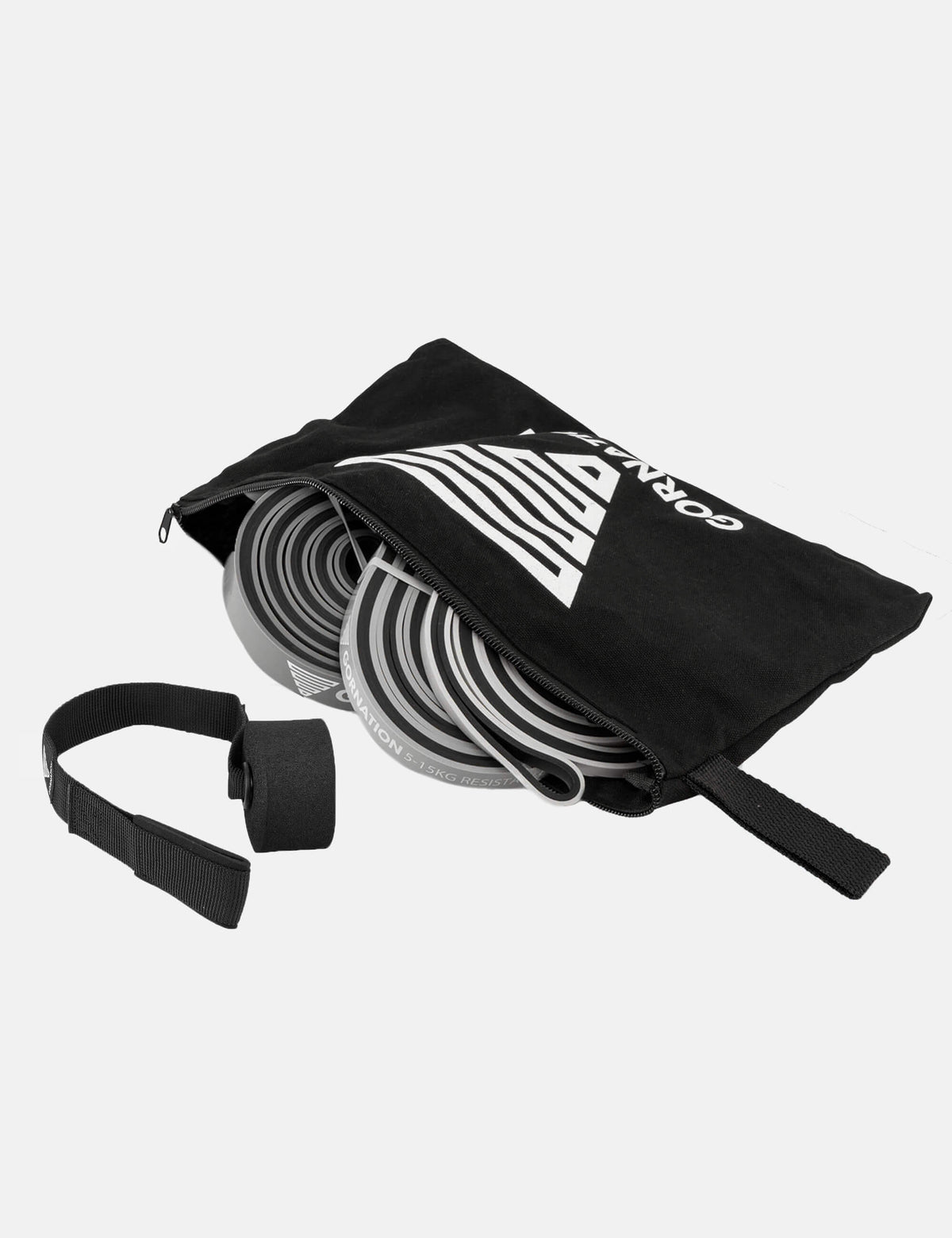
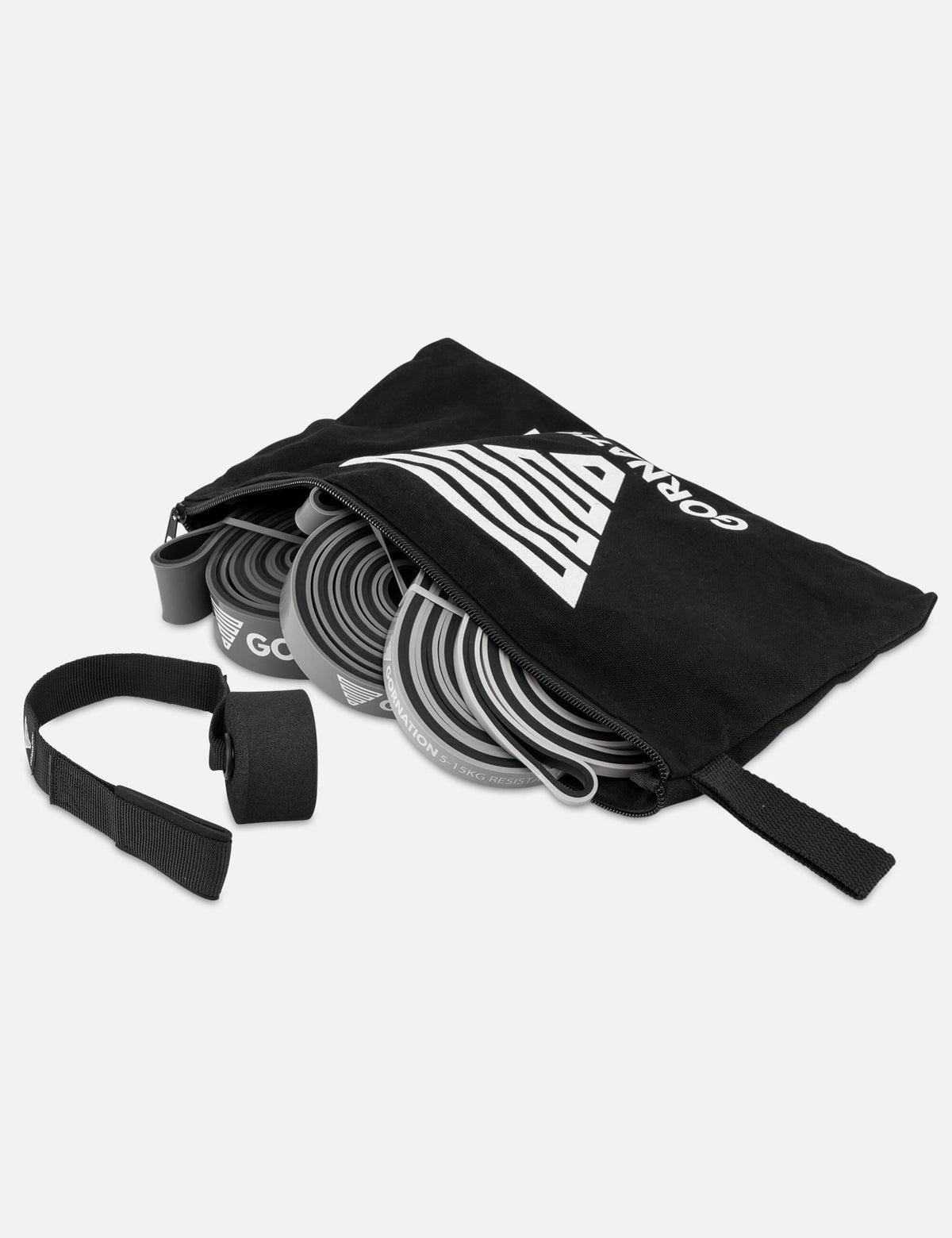
Resistance bands are the most versatile accessory for home training. They serve three purposes:
- Activating the glutes during your warm-up
- Assisting your first pistol squats
- Adding resistance to hip thrusts and calf raises
Compact and light, they suit every level.
The Dumbbell and Weight Vest: Adding Load to Your Movements
The Elite Weight Vest, available in 10 kg and 20 kg, spreads the load across your torso: ideal for dynamic movements like box jumps or walking lunges, where a belt would swing around.
The Workout Mat: Protecting Your Joints at Home
A workout mat protects your knees during deep lunges, cushions jump landings and stops you slipping in unstable positions. On hardwood or tile, it's a minimal investment for immediate joint comfort.
Weight Plates: Modular Load for Fine-Tuned Progress
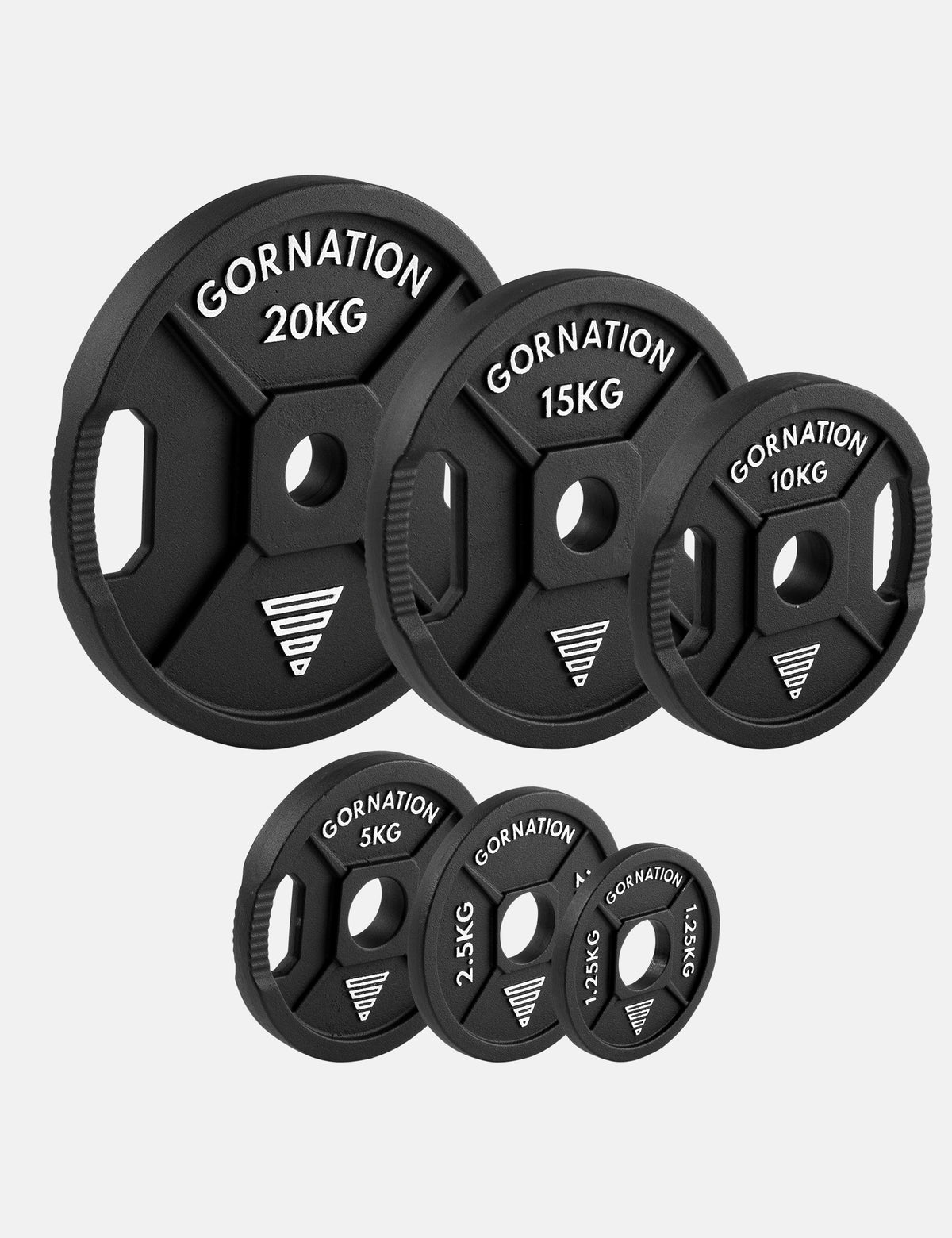
Weight plates pair with a barbell to fine-tune your load. It's the best progressive overload tool available: going from 5 to 7.5 kg is a manageable step, unlike a sudden 10 kg jump.
Barbell and Dumbbells: Opening Up Weighted Exercises
A barbell with clips unlocks classic squats, heavy hip thrusts and Romanian deadlifts at home. Dumbbells, meanwhile, let you load walking lunges and Bulgarian split squats without bulky equipment.
The Plyo Box: The Essential Support for Home Leg Exercises
The Wooden Plyo Box is arguably the highest-value piece of equipment for lower body training at home. Rotate it to get three heights (40, 50 and 60 cm) and it covers a large share of the movements in this guide on its own:
| Use | Exercise |
|---|---|
| Stepping platform | Step up, side step up, weighted step up |
| Landing surface | Box jump, jump over box, burpee over box |
| Rear foot support | Bulgarian split squat |
| Depth marker | Box squat, elevated pistol squat |
| Hip support | Hip thrust, single leg hip thrust |
Its solid birch construction supports up to 150 kg, which leaves plenty of margin even with a weight vest on your back.
Quick equipment recap based on your goal:
| Equipment | Main use | Recommended level |
|---|---|---|
| Resistance bands | Warm-up, assistance, resistance | All levels |
| Workout mat | Joint comfort, grip | All levels |
| Plyo Box | Step ups, box jumps, split squats, hip thrusts | All levels |
| Dumbbell and plates | Loading step ups, lunges, squats | Intermediate to elite |
| Weight vest 10 or 20 kg | Dynamic and explosive movements | Intermediate to elite |
| Barbell and dumbbells | Heavy squats and lunges | Advanced to elite |
Home Leg Routine and Training Plan
The Complete Programme to Follow at Home
Here's a typical 45-minute session, applicable from intermediate level onward:
| Block | Exercise | Sets × reps |
|---|---|---|
| Warm-up (5 min) | Hip and ankle mobility, bodyweight squats | 20 reps |
| Strength (20 min) | Bulgarian split squat | 4 × 8 per leg |
| Strength | Hip thrust | 4 × 15 with one-second pause |
| Strength | Step up | 3 × 10 per leg |
| Unilateral and explosive (12 min) | Assisted pistol squat | 3 × 6 per leg |
| Unilateral and explosive | Box jump | 5 × 5 |
| Finisher (8 min) | Calf raises | 4 × 20 |
| Finisher | Jefferson curl | 3 × 5 very slow |
Adapt loads and set counts to your actual level, not your desired one.

How Many Leg Sessions per Week to Progress?
Two weekly sessions are the best compromise for the vast majority of athletes. That frequency stimulates the muscle twice while leaving 72 hours of recovery between sessions.
- Beginner: one session per week for the first six weeks, while tendons and nervous system adapt
- Intermediate: two sessions, one strength-focused, one volume-focused
- Advanced: three sessions alternating heavy, explosive and light work
How to Apply Progressive Overload Without Machines
With no rack or machines, you have five levers to progress:
- Increase reps on the same exercise, week after week
- Slow down execution: a 4-second descent is far harder than a one-second one
- Reduce points of support: switching from bilateral to unilateral nearly doubles the relative load
- Increase range of motion: elevate the front foot, let the heels drop lower
- Add external load with a weight vest or dumbbell, once the first four levers are exhausted
Log your sessions. It's the only reliable way to know whether you're actually progressing or repeating the same workout for three months.
FAQ: Your Questions About Leg Exercises at Home
Can You Really Build Muscle Without Heavy Loads?
Yes, because muscle growth depends mainly on mechanical tension and proximity to failure, not on the number written on a barbell. By playing with tempo, range of motion and unilateral variations like the pistol squat, you create a more than sufficient stimulus.
How Long Before You See the First Results?
Expect 2 to 4 weeks for the first neural adaptations (more stability, more reps) and 8 to 12 weeks for visible changes in muscle mass. Consistency remains the deciding factor, far ahead of programme choice.
Should You Adapt Your Routine Depending on Whether You're a Man or a Woman?
No, the exercises and progression mechanisms are strictly identical, since muscle physiology doesn't differ fundamentally. The only nuances are fine-tuning: women often tolerate slightly higher volume, men have more absolute strength on explosive work.