| 8,000+ Reviews
 Free EU Shipping above 100€*
 400,000+ Customers Worldwide
 Worldwide Tracked Shipping


In this article, you'll discover 8 arm exercises you can do at home, 4 for your biceps and 4 for your triceps, that you can run through in your living room or at the park. We'll give you the exact technique, the mistakes to avoid and a ready-to-use program.
Why arm training matters in calisthenics
Arms aren't just about aesthetics. They're the transmission link between your body and the bar. Weak triceps will stall you on weighted dips, underdeveloped biceps will limit your progress on the muscle up and advanced pulling movements.
In other words: building your arms unlocks everything else in your practice.

Biceps and triceps: what to understand before you train
Most people focus only on biceps. Classic mistake. Your triceps make up roughly two thirds of your total arm volume. If you want bigger arms, that's where the priority goes.
The biceps flexes the elbow and helps supinate the forearm. The brachialis, sitting underneath, pushes the biceps upward as it grows, and that's what gives your arm its lateral thickness.
On the triceps side, you have three heads: long, lateral and medial. The long head only gets properly trained with your arms overhead, which is exactly why overhead extensions belong in your routine.
A solid home arm workout therefore needs to combine elbow flexion (biceps) and elbow extension (triceps), across varied angles.
The gear that makes a difference (and what you can skip)
You can start with zero equipment. Diamond push ups and dips between two chairs are enough for your first few weeks.
But let's be honest: for long-term progress, a few pieces of kit make a real difference.
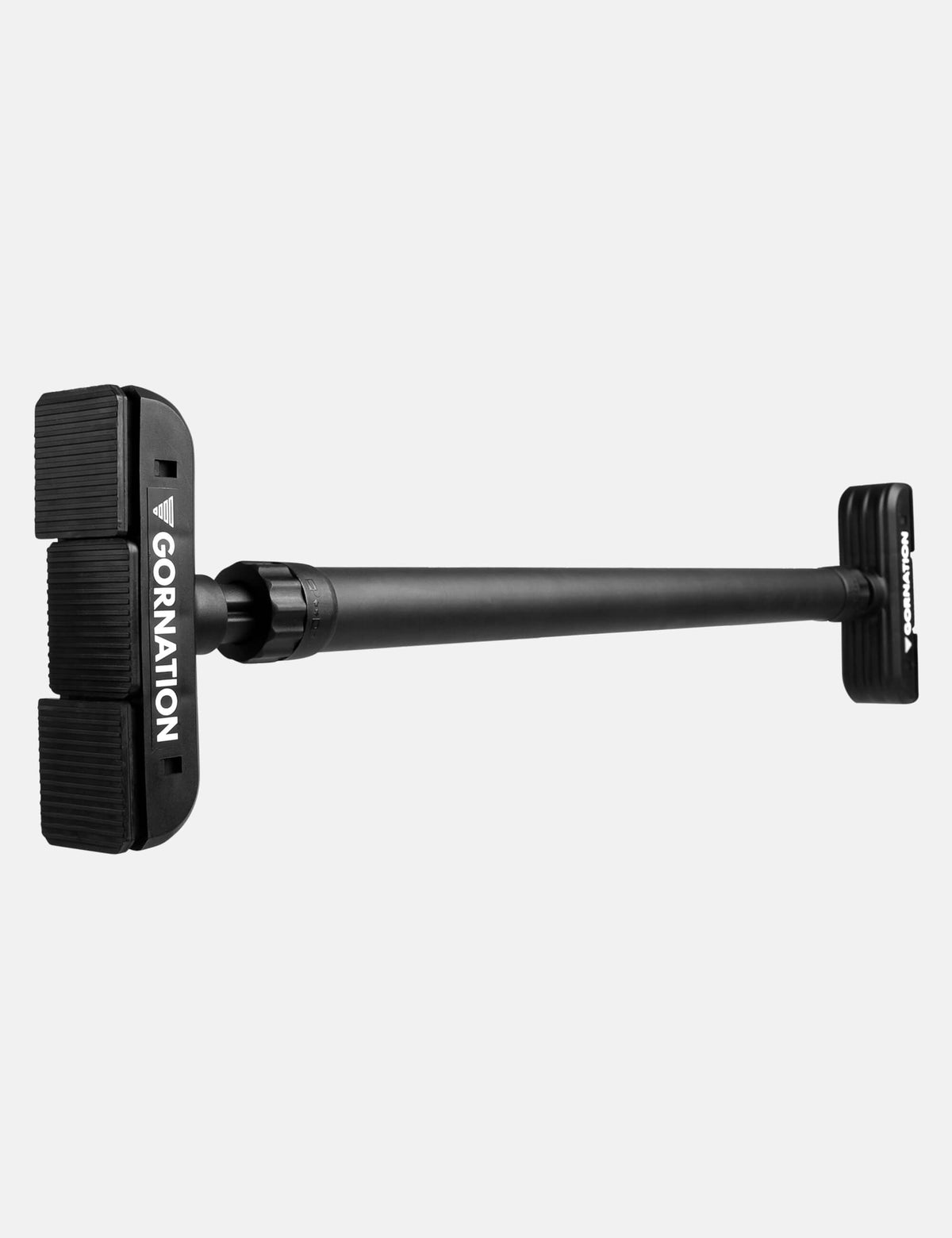
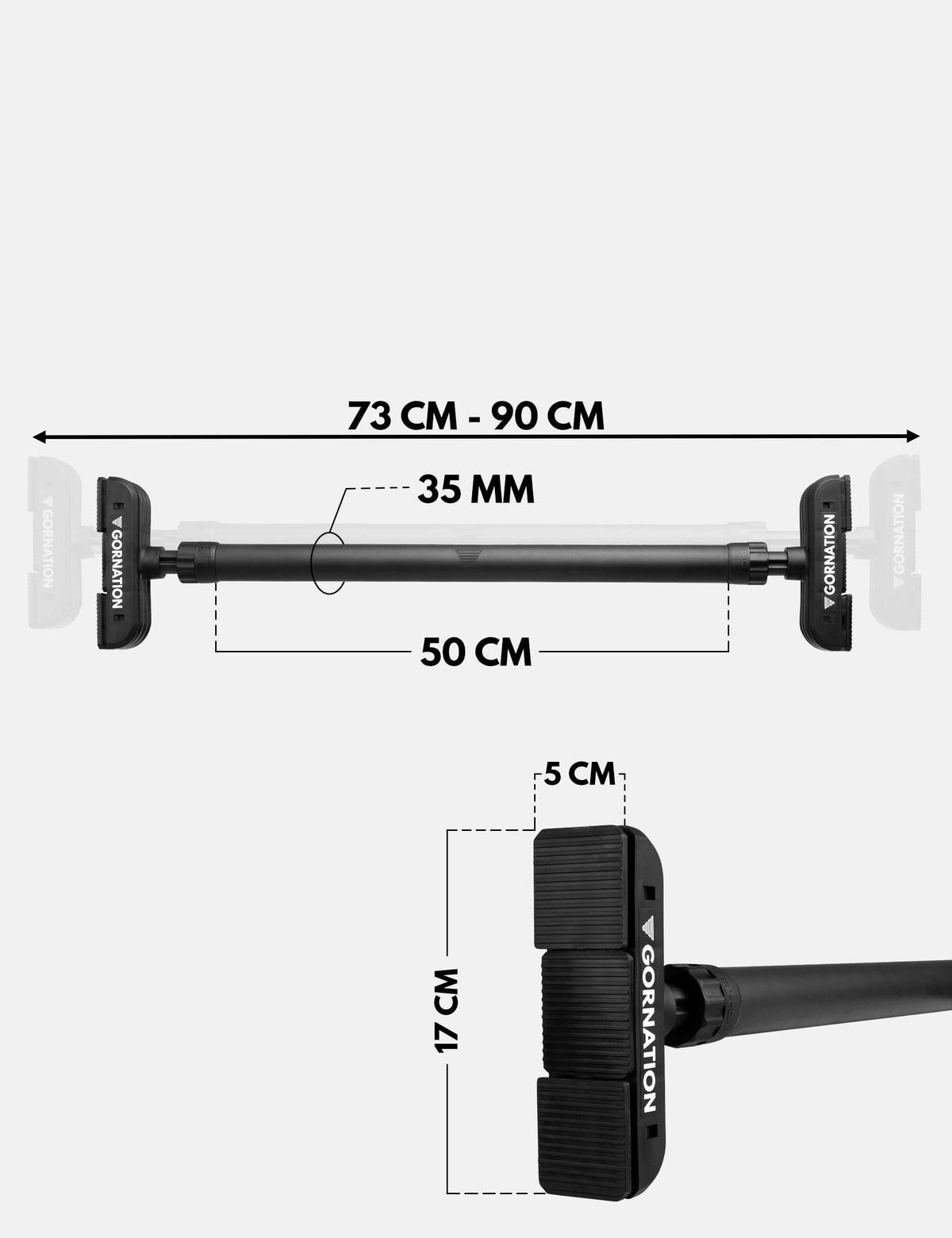
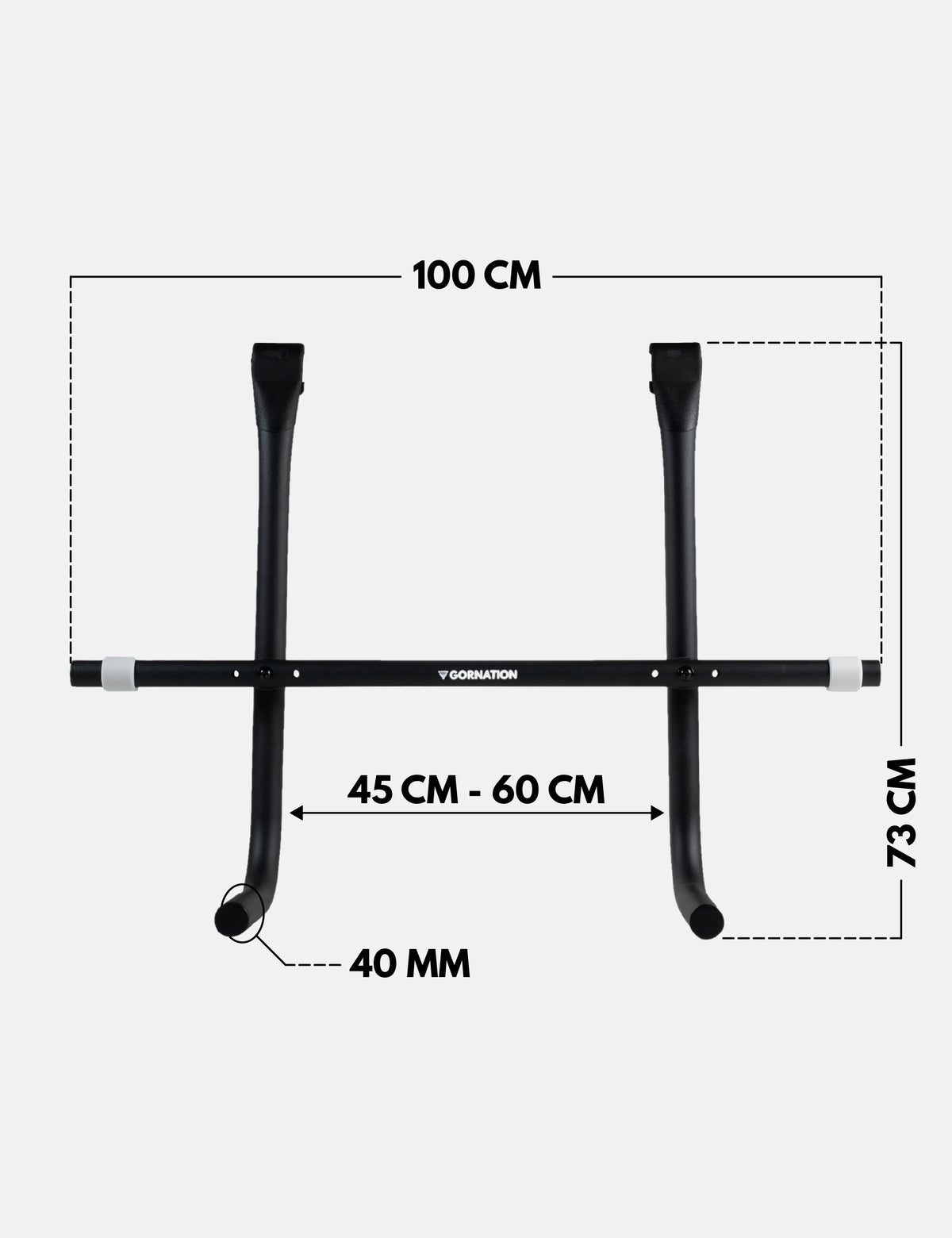
- A pull up bar: essential for chin ups, the best bodyweight biceps exercise there is.
- Workout rings: they open up a huge range of exercises and are far gentler on your joints.
- Parallettes: they increase your range of motion and protect your wrists.
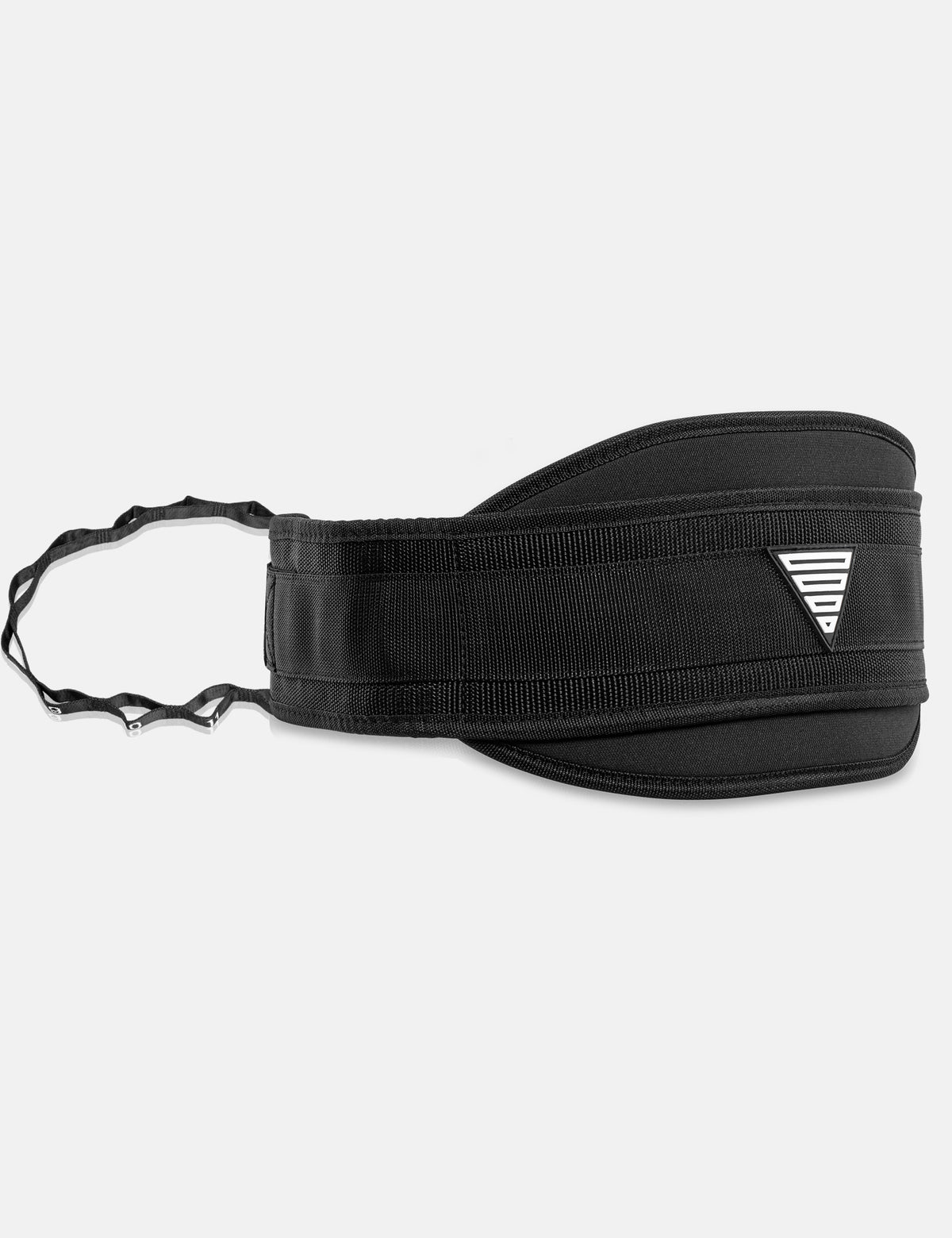
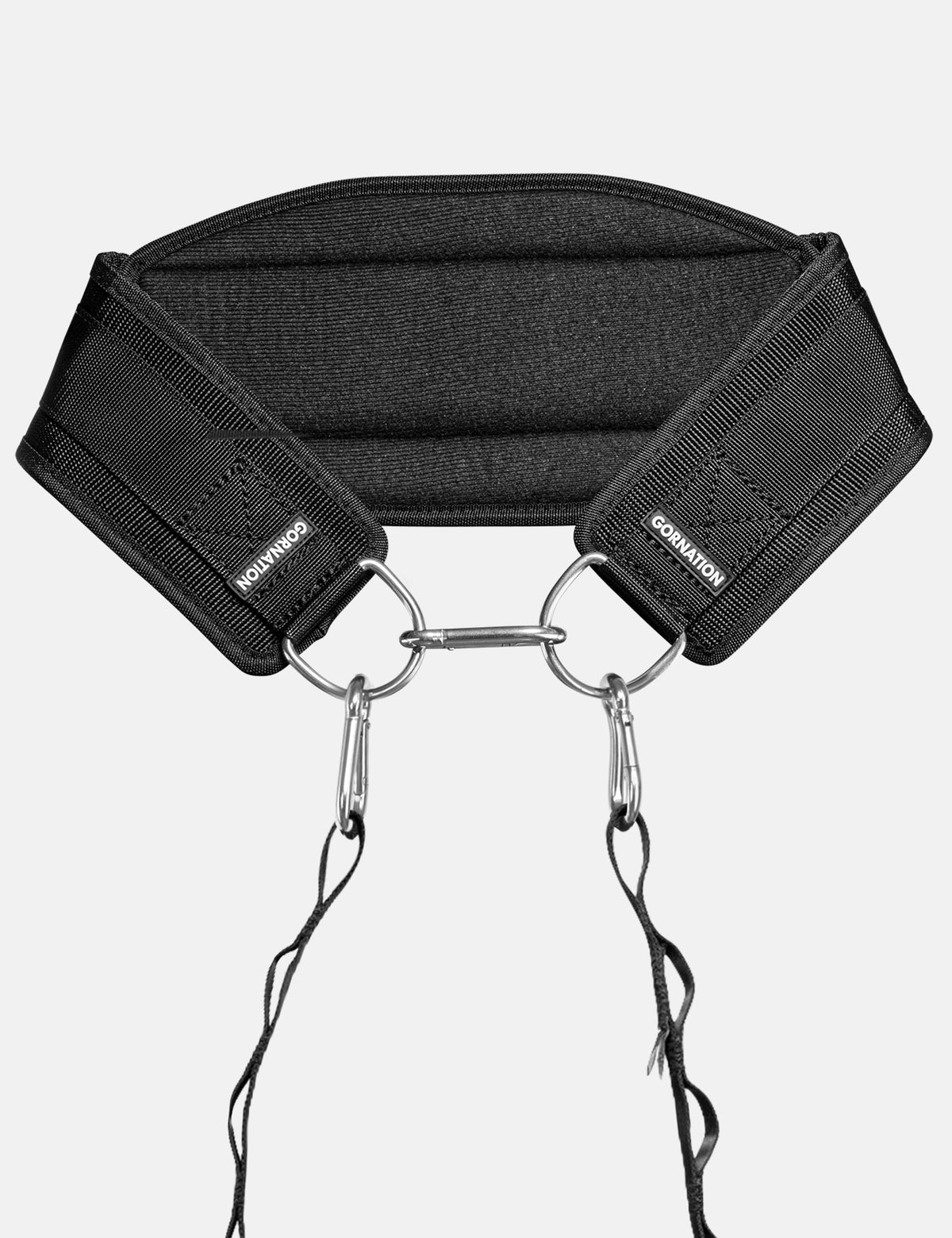
- A dip belt: your best friend once bodyweight starts feeling too light.
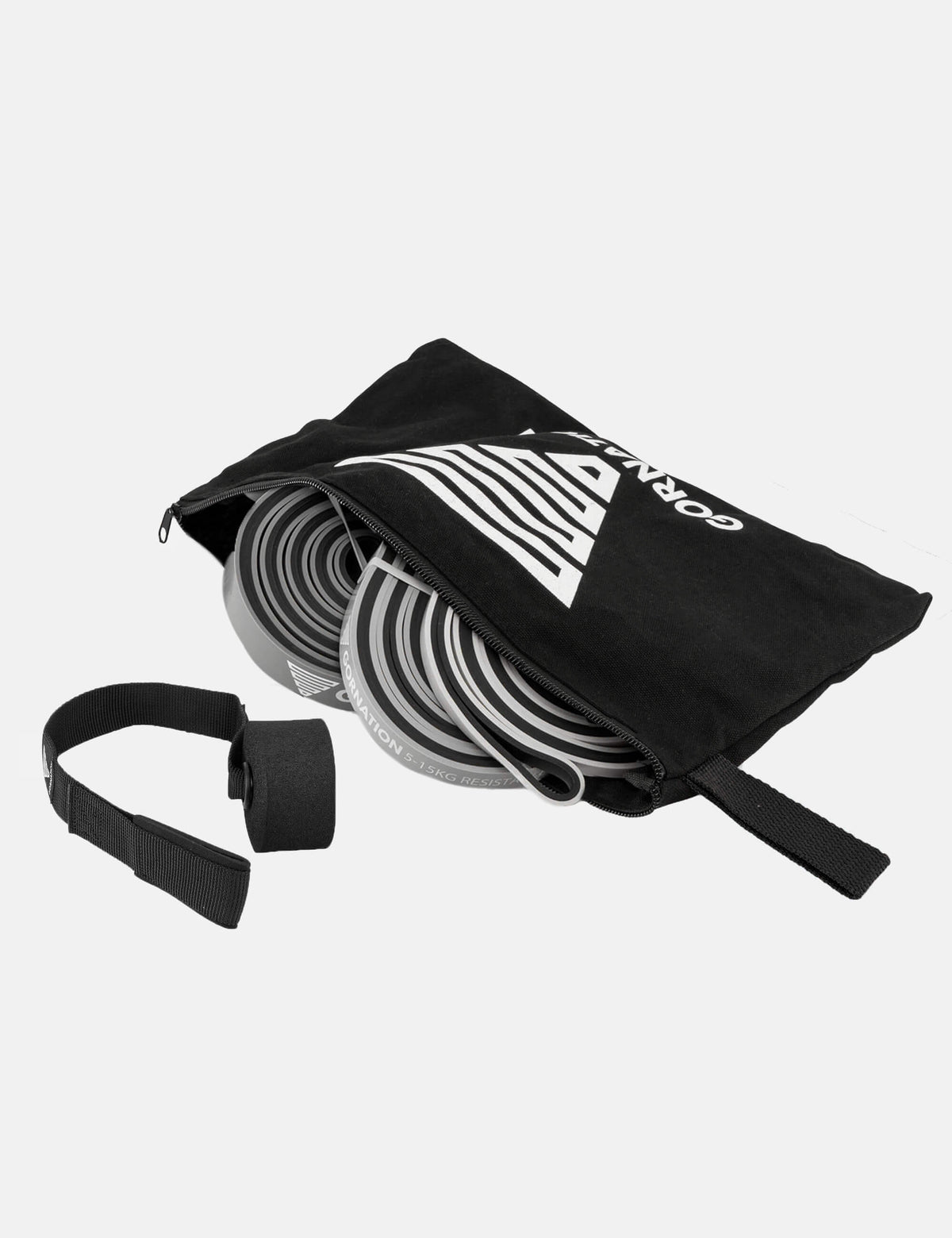
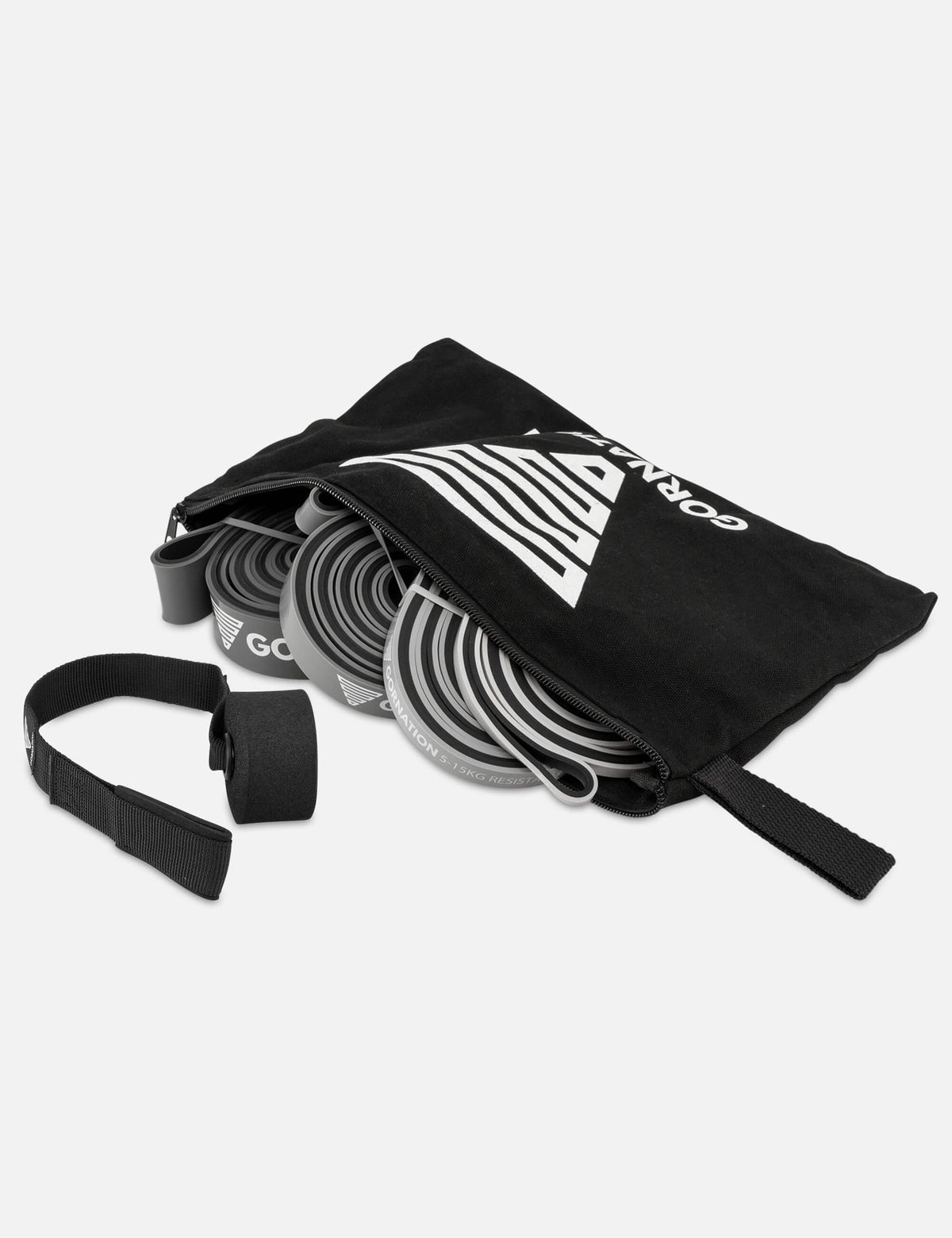
- Resistance bands: perfect for beginners and for drop sets.
The best part? Most of it fits in a bag. Your home gym takes up no more space than a shelf.
The 4 best exercises to build your biceps
1. The biceps curl
The classic, and for good reason: it's the most direct way to isolate the biceps. It pairs perfectly with the calisthenics pull exercises that already hit your arms indirectly.
How to do it:
- Stand with feet hip-width apart, a dumbbell or a band in each hand, palms facing forward.
- Keep your elbows pinned to your sides, this is the key point.
- Curl up by contracting the biceps, without swinging your back.
- Lower slowly (3 seconds) until your arms are almost fully extended.
Common mistake: using momentum from your back. If you're swinging, the load is too heavy. Drop it and focus on the contraction.
Sets: 3 to 4 sets of 10 to 15 reps.
No equipment? A band or even two filled water bottles will do the job when you're starting out.

2. The hammer curl
Same movement, different grip, and the result is completely different.
Here your palms face each other (neutral grip). This position hits the brachialis and brachioradialis harder, two muscles that add thickness to your arm and strengthen your forearm.
How to do it:
- Neutral grip, palms turned inward.
- Elbows locked against your ribs.
- Curl up to shoulder height, squeeze for a second at the top.
- Lower under control.
Worth knowing: strong forearms mean a better grip on the bar. You'll hang and pull for longer. And to stop your hands slipping on long sets, liquid chalk makes all the difference.
Sets: 3 sets of 12 reps per arm.
3. The chin up
This is the king of bodyweight biceps exercises. The supinated grip loads your biceps heavily while recruiting your back at the same time. Once you own it, move on to the chin up to pull up for explosive work.
How to do it:
- Grab the bar with a supinated grip (palms toward you), hands shoulder-width apart.
- Brace your core and glutes, legs slightly forward.
- Pull by driving your elbows down and back, chin above the bar.
- Lower slowly to full arm extension.
Can't do one yet? Start with the australian chin up, bar set low and feet on the ground. It's the cleanest route to a full rep.
Hitting 12 clean reps? Add external load. It's the most effective way to apply progressive overload in calisthenics.
Sets: 4 sets to near failure with clean reps.
4. The ring curl
An underrated exercise, and a brutal one. Also known as the bodyweight curl, it's one of many exercises you can run on gymnastic rings.
How to do it:
- Set your rings at roughly hip height.
- Grab them with a supinated grip, walk your feet forward so you lean back.
- Arms straight, body braced in a straight line.
- Pull yourself up by bending your elbows only, without moving your shoulders.
- Return slowly to the start position.
The difficulty trick: the further forward your feet and the more you lean back, the harder it gets. You adjust intensity by the centimetre, without changing anything else.
The big advantage of rings? They're self-orienting. Your wrists and elbows follow their natural path, which massively cuts the risk of joint pain.
Sets: 3 sets of 8 to 12 reps.
The 4 best exercises to build your triceps
5. Dips
If you could only keep one triceps exercise, this would be it. You'll find the full technical breakdown in our dedicated guide to the dip.
How to do it:
- Position yourself between two dip bars or on rings, arms locked out.
- Torso leaning slightly forward, legs bent behind you.
- Lower until your arms hit a 90° angle.
- Push hard to come back up and lock out your elbows.
Maximum triceps version: keep your torso as vertical as possible. The more you lean forward, the more you shift the work to your chest. The straight bar dip is an excellent variation for that.
No bars at home? Use two stable chairs, or run the assisted dip if the full movement is still too hard.
Sets: 4 sets of 8 to 15 reps.

6. Diamond push ups
Simple, free, brutally effective. Diamond push ups are the home triceps exercise by definition, and one of the best push exercises to start with.
How to do it:
- In a push up position, bring your hands together to form a diamond with thumbs and index fingers.
- Place that diamond under your chest, not under your face.
- Body braced, one straight line from head to heels.
- Lower while keeping your elbows close to your body.
- Push back up, squeezing the triceps hard.
Common mistake: flaring your elbows. It shifts the work to your chest and puts your shoulders in a vulnerable position.
Too hard? Do them on your knees or with hands elevated on a bench. Too easy? Switch to the decline push up with feet elevated, or add a weight vest.
Sets: 4 sets of 10 to 20 reps.
7. The overhead extension
This is the only exercise on this list that specifically targets the long head of the triceps, the one that gives the back of your arm that horseshoe shape. Our tricep extension guide breaks down every technical cue.
How to do it:
- Standing or seated, hold a load with both hands, arms extended overhead.
- Bend your elbows to lower the load behind your neck.
- Keep your elbows pointing at the ceiling and tucked in, they shouldn't flare.
- Extend your arms fully to come back up.
No-equipment variation: anchor a band overhead or under your foot and replicate the same movement. The increasing tension is actually an advantage, it peaks exactly where your triceps are strongest.
Sets: 3 sets of 12 to 15 reps.
8. The ring triceps extension
The bodyweight counterpart to the overhead extension. Vicious, and often called the ring skull crusher. New to rings? Break yourself in with the ring push up first to get used to the instability.
How to do it:
- Set the rings at hip height or slightly above.
- Grab them, lean forward with your body braced in a straight line, arms extended in front of you.
- Bend your elbows to bring your forehead between the rings.
- Elbows stay high and fixed, that's the whole secret of the movement.
- Push to return to straight arms.
Careful: this one is harder than it looks. Start with the rings high (body nearly upright) and lower them progressively over the weeks.
Sets: 3 sets of 6 to 10 reps.
How to maximise your results
Doing the right exercises is half the job. The other half is how you organise them.
Volume, frequency and rest times
For hypertrophy, aim for 10 to 20 weekly sets per muscle group. Spread across 2 to 3 sessions, that's the sweet spot for most people.
Arms recover fast. You can train them 2 to 3 times per week, leaving at least 48 hours between targeted sessions.
On rest between sets: 60 to 90 seconds on isolation work, 2 to 3 minutes on heavy movements like weighted dips and chin ups.
And above all: train close to failure. Keeping 1 to 3 reps in reserve is the zone where muscle growth actually gets triggered.

Progressive overload with a dip belt
This is the non-negotiable principle behind all progress. Your body adapts, and if you run the same sets at the same intensity for six months, you stall. Full stop.
In calisthenics, you have several levers:
- Adding reps week after week
- Slowing the eccentric phase to increase time under tension
- Cutting rest times
- Making the movement harder (elevating your feet, leaning back further)
- Adding external load with a belt or a vest
That last option is the most measurable. Once you pass 12 clean chin ups, adding 5 kg drops you back into the 6 to 8 rep range, which is exactly where strength and muscle volume build best. Our guide to weighted calisthenics exercises shows you how to load correctly.
The mistakes blocking your progress
Neglecting your triceps. As we said, two thirds of the arm. If your arms aren't growing, that's probably where to look.
Partial range of motion. Half-repping your dips, never straightening your arms at the bottom of your chin ups, you lose a huge chunk of the benefit. Fewer full reps beat plenty of sloppy ones.
Going too fast. The eccentric phase is the main driver of muscle growth. Count 2 to 3 seconds on every lowering phase.
Forgetting to brace. On chin ups and ring curls, a loose body bleeds tension away from the target muscle. Squeeze your abs and glutes.
Tracking nothing. Without a log, you can't know whether you're progressing. Write down your sets, reps and load every session.
Nutrition and recovery
No arm workout works without the foundations.
Protein: aim for 1.6 to 2.2 g per kilo of bodyweight per day. That's the fuel for muscle rebuilding.
Calories: to add size, you need a slight surplus (+200 to 400 kcal per day). You can't build muscle from nothing.
Sleep: 7 to 9 hours. Growth hormone secretion peaks overnight.
Hydration: muscle is roughly 75% water. Even mild dehydration tanks your performance.
Home arm program (beginner and advanced)
Beginner, 2 sessions per week
| Exercise | Sets | Reps |
|---|---|---|
| Diamond push ups (knees if needed) | 3 | 8-12 |
| Band-assisted chin ups | 3 | 5-8 |
| Bench dips on a chair | 3 | 10-15 |
| Band curls | 3 | 12-15 |
| Band overhead extensions | 3 | 12-15 |
If you're a complete beginner, start with our calisthenics workout plan for beginners.
Advanced, 3 sessions per week
| Exercise | Sets | Reps |
|---|---|---|
| Weighted chin ups | 4 | 6-8 |
| Ring dips | 4 | 8-12 |
| Ring curls | 3 | 8-12 |
| Feet-elevated diamond push ups | 3 | 12-20 |
| Ring triceps extensions | 3 | 6-10 |
| Hammer curls | 3 | 12 |
Always warm up for 5 to 10 minutes first: shoulder rotations, arm circles, and a few seconds of dip hold to prime your elbows. Your joints will thank you.

FAQ: arm exercises at home
Can you really build your arms without equipment?
Yes, especially early on. Diamond push ups, dips between two chairs and close-grip push ups create a solid stimulus for several months. After that phase though, bodyweight alone becomes limiting for biceps, since there's no effective biceps exercise without something to hang from. A bar or a set of rings then becomes necessary.
How often should you train your arms?
Two to three times per week is ideal for most people. Arms are relatively small muscles that recover quickly. Always leave 48 hours between targeted sessions, and remember they're already working indirectly during your pull up and push up sessions.
Biceps or triceps: which should you prioritise for bigger arms?
The triceps, no contest. They make up roughly two thirds of your arm volume. If your goal is aesthetic, give them at least as much volume as your biceps, ideally a bit more. That said, a balanced program remains better for elbow joint health.
How long before you see results?
Expect 4 to 6 weeks to feel a noticeable strength gain, and 8 to 12 weeks to see visible changes in arm circumference. These timelines vary with your starting point, genetics, nutrition and consistency. Consistency always beats occasional intensity.
Do you need weights to progress in calisthenics?
Not necessarily, but it helps enormously past a certain level. As long as you can make a movement harder, you're progressing. Once you're hitting 15 clean pull ups, external load becomes the simplest and most measurable way to keep pushing.
Conclusion
You now have 8 arm exercises you can do at home covering the whole arm: biceps, brachialis, forearms and all three triceps heads. No gym membership required, just a bit of space and some well-chosen kit.
Remember the essentials: prioritise your triceps, train through a full range of motion, apply progressive overload week after week, and sleep properly.
The rest is consistency. Pick the program that matches your level, log your performance and let time do its work. Your arms will follow.