| 7,000+ Reviews
 Free EU Shipping above 100€*
 400,000+ Customers Worldwide
 Worldwide Tracked Shipping


What Is a Door Pull Up Bar?
A door pull up bar is a horizontal bar that mounts inside or on top of a door frame without altering your home. Unlike a wall mounted bar, it usually requires no drilling: it holds either by pressure between the two uprights (telescopic system) or by hooking onto the frame (hook system).
There are two main families:
- Adjustable pressure models, wedged between the uprights via an extendable mechanism with anti-slip rubber ends.
- Hook models, resting on top of the door frame and removable in seconds.
A third option sits slightly apart: the screw mounted bar, fixed inside or just above the doorway, offering more clearance for advanced calisthenics movements.
In every case the idea is the same: give you a solid hanging point at the right height without dedicating an entire room to your strength training gear.

6 Good Reasons to Use a Door Pull Up Bar
1. Train at Home, With Zero Friction
This is the killer argument. No commute, no membership, no waiting for machines. Your home workout starts whenever you decide: ten minutes in the morning, three sets in the evening, some hanging work between two meetings. That freedom completely changes your relationship with training, especially if your schedule is unpredictable.
It's also the perfect entry point into calisthenics, a discipline built almost entirely on bodyweight and a reliable bar.
2. Build a Consistent Routine With a Bar You Always See
Equipment buried in a closet gets forgotten. A bar mounted in a doorway you walk through twenty times a day acts as a permanent visual cue. This underrated detail explains why so many athletes progress faster at home than in a gym.
The "greasing the groove" method works beautifully here: a few easy reps every time you pass, several times a day, never to failure. The result is a high weekly volume and clear progress on your pull ups.
3. Strengthen Your Entire Upper Body
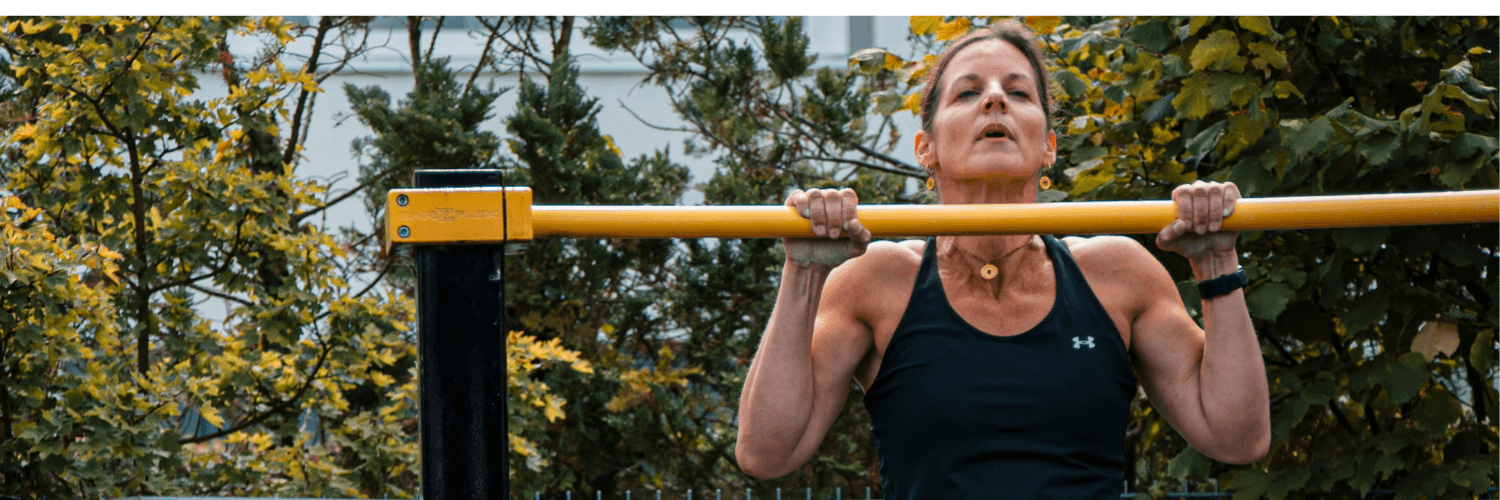
The pull up remains one of the most complete exercises out there. It recruits your back, arms, shoulders and core at once, in a natural, functional movement. Add knee raises, hanging leg raises and dead hangs for grip, and one accessory covers almost your whole upper body.
4. Progress at Your Own Pace, Whatever Your Level
Can't do a full pull up yet? No problem. With a resistance band looped over the bar, you cut the load and train the full range of motion from day one.
If you're already banging out reps, move on to wide grip pull ups, neutral grip pull ups, weighted work, or muscle ups on models with enough clearance.
Progression is seamless: the same tool serves the complete beginner and the advanced athlete.
5. Save Space in Your Home
A door bar takes up the space of… a door. Some models come apart in seconds and slide under a bed or behind a wardrobe. For a studio or a shared flat, that's a decisive advantage over a full training station.
6. Get Outstanding Value for Money
For roughly 50 to 90 euro, you get equipment built to last years, paid off within a couple of months compared to a gym membership. Few products offer such a ratio between cost, footprint and muscular return.

Which Muscles Does a Pull Up Bar Work?
The list is longer than most people think:
- Latissimus dorsi: the primary pulling muscle, responsible for that V-shaped back.
- Traps and rhomboids: engaged at the top of the movement, they improve posture and offset long hours of sitting.
- Biceps and brachialis: heavily recruited in a supinated grip (chin ups).
- Rear delts: shoulder stabilizers throughout the pulling phase.
- Forearms and grip: simply hanging builds serious grip strength.
- Abs and deep core: essential to prevent swinging and directly targeted by leg raises.
By changing grip width and hand orientation, you shift the emphasis from one muscle group to another. A wide grip hits the back harder, a close supinated grip hits the arms. For inspiration, our roundup of 100 best pull up bar exercises covers every possible movement.
Our Different Door Pull Up Bars
GORNATION offers three models built for different needs.
Door Pull Up Bar Extend-it
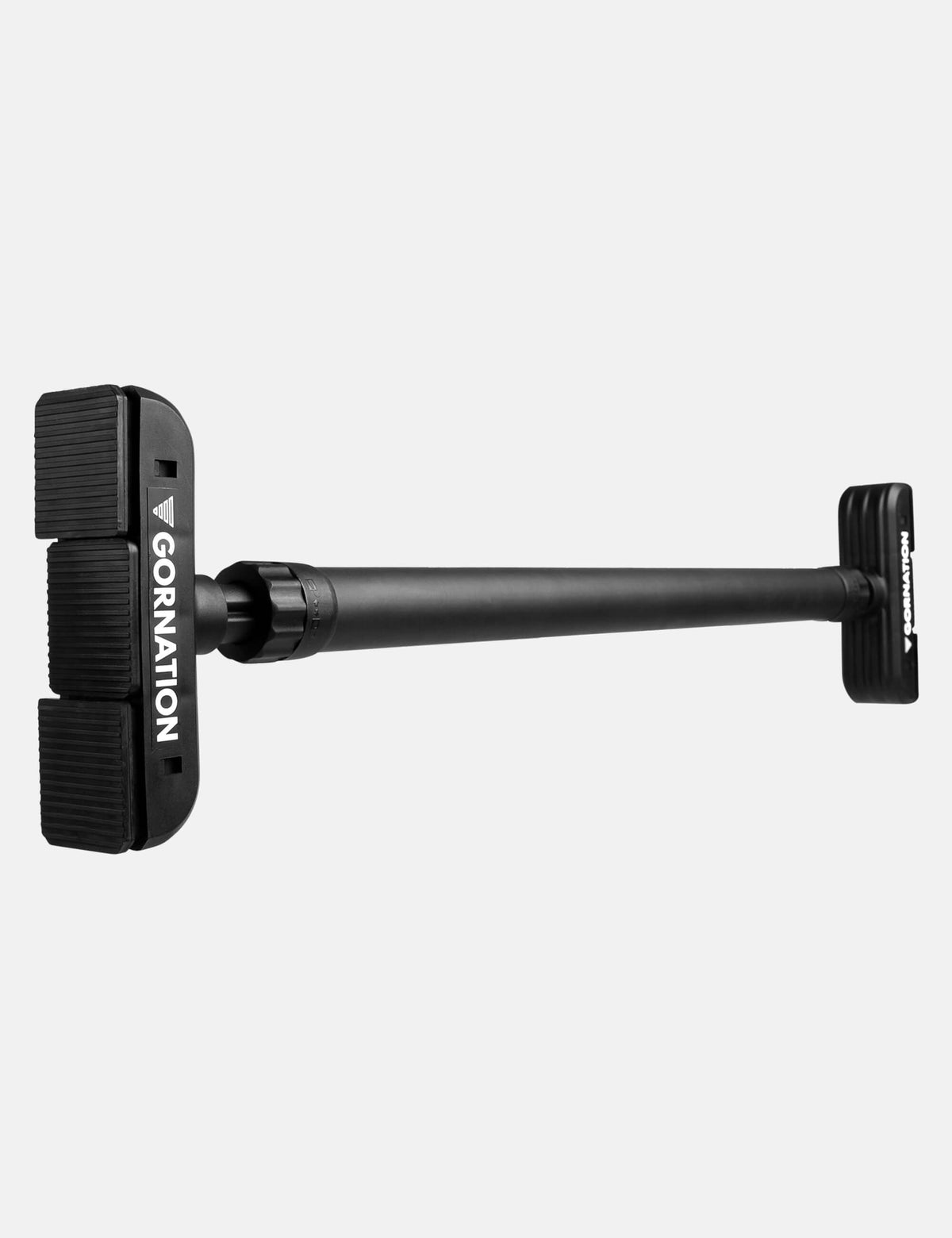
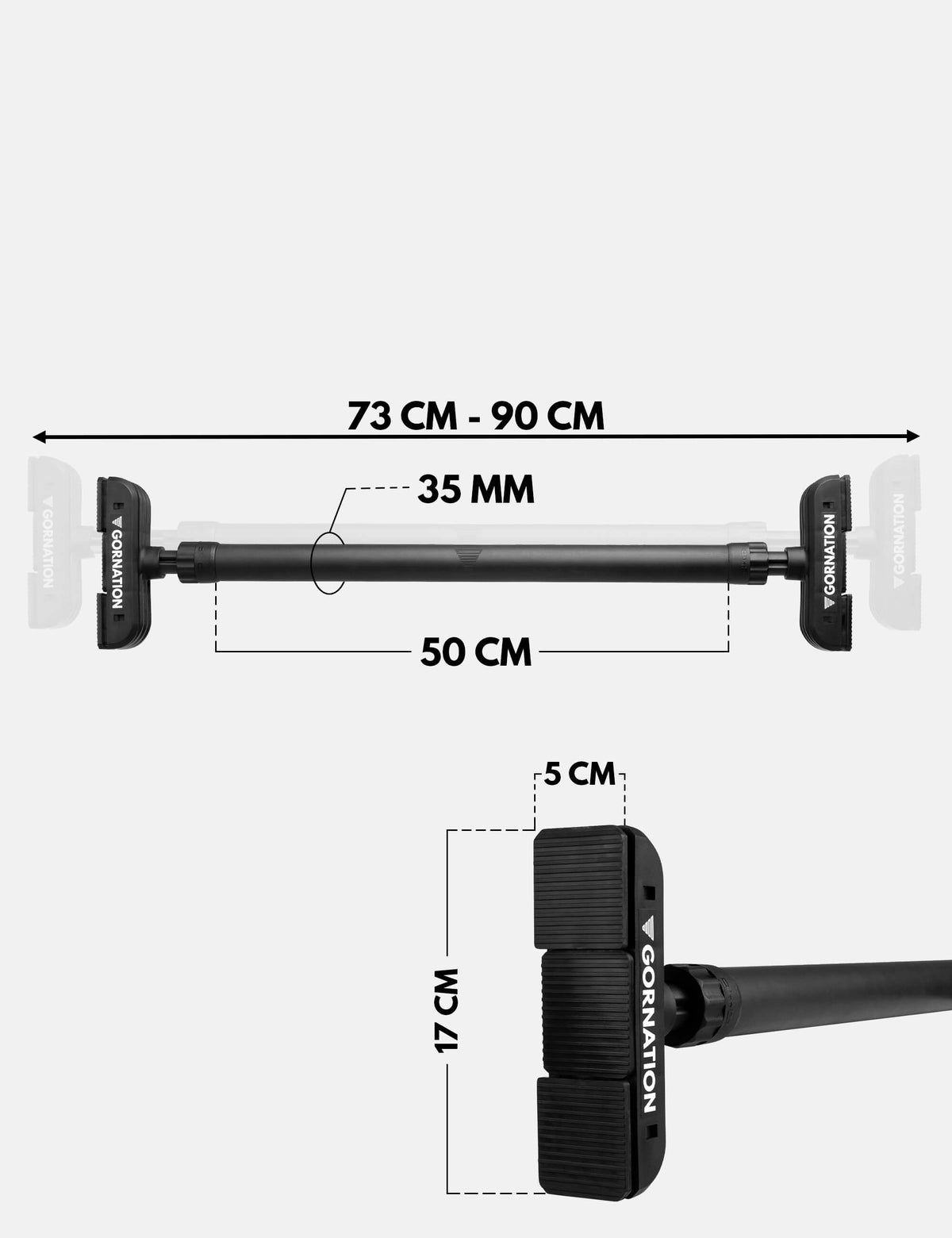
The bestseller. A rotating telescopic bar adjustable from 73 to 90 cm, it fits every standard frame thanks to triple anti-slip rubber protection. The anti-rotational design keeps it firmly in place, and the 50 cm firm foam grips stay comfortable through long sets. Compatible with rings and resistance bands, 150 kg max load.
Door Pull Up Bar Hook-it
Two bars of different thicknesses, multiple grip options, foldable and compact. It hooks on and comes off in seconds with no permanent fixing. White rubber ends protect your frame from marks. 130 kg max load.
Doorway Pull Up Bar Uni
The screw-mounted version in powder-coated steel. With 15 cm of clearance from the mounting surface, it unlocks advanced moves: front lever, L-sit hangs, back lever pull ups. 200 kg max load, screws for concrete, brick or wood included.

Which Door Pull Up Bar Should You Choose?
| Criteria | Extend-it | Hook-it | Uni |
|---|---|---|---|
| Mounting | Telescopic pressure | Hooks over the frame | Screws (wall, frame, beam) |
| Drilling | No | No | Yes |
| Max load | 150 kg | 130 kg | 200 kg |
| Quick removal | Yes | Yes, in seconds | No |
| Adjustable | 73 to 90 cm | No | No |
| Grip options | 50 cm foam grip | 2 thicknesses, multi-grip | Single grip, matte finish |
| Wall clearance | Limited | Limited | 15 cm |
| Advanced moves | Pull ups, chin ups, raises | Pull ups, chin ups, strength | Front lever, L-sit, back lever |
| Best for | Beginners, versatility | Small spaces, rentals | Intensive, advanced training |
Our verdict: if you're starting out or want a versatile, affordable bar that adapts to your frame, the Extend-it is the obvious pick. If you rent, want to mount and remove the bar in seconds or value grip variety, go for the Hook-it. And if advanced calisthenics is the goal and you're able to drill, the Uni gives you the clearance and strength that static skills demand.
How to Install and Use Your Door Pull Up Bar Properly
First things first: check your door frame. A cracked, plasterboard or loosely fixed frame won't handle your bodyweight under dynamic load. Run a hand over it, press firmly — everything must feel rigid. Our complete installation guide walks through each setup step by step, and the door pull up bar safety page lists all compatibility requirements.
Installing the Extend-it: no tools needed. Rotate the bar out to the desired length, place it between the uprights, then keep turning until the rubber ends are firmly under pressure. The inner frame width must be between 74 and 90 cm, with a depth of at least 5 cm. Always test stability by loading gradually before your first set.
Installing the Hook-it: simply rest the hooks on top of the frame. For the system to work, the frame must protrude 1.5 to 2 cm from the wall, be no taller than 8.5 cm, and be between 12 and 21 cm deep. Check that the white rubber ends sit flat, then load slowly. When you're done, it folds away.
Installing the Uni: mark your position, drill according to the material (concrete, brick or wood) and use the supplied screws and Fischer plugs. Tighten firmly, then check for any play. Mount it into a load-bearing wall or a solid frame: the stated 200 kg capacity only means something if the support can match it.

Sample Full Workout With a Door Pull Up Bar
Here's a 30-minute session you can scale to your level.
Warm-up (5 min)
Shoulder rotations, arm circles, 2 × 20 seconds of dead hang to prepare joints and grip.
Block 1 – Vertical pulling (4 sets)
Pronated pull ups, 6 to 10 reps. Use a resistance band for assistance if needed. Rest 90 seconds.
Block 2 – Arms and back (3 sets)
Close-grip chin ups or neutral grip pull ups, 6 to 8 reps with a 3-second controlled descent. Rest 90 seconds.
Block 3 – Hanging core work (3 sets)
Knee raises, 10 to 15 reps, no swinging. Advanced version: hanging leg raises with straight legs.
Block 4 – Grip and isometrics (3 sets)
Active hang with elbows at 90°, 15 to 30 seconds. Excellent carryover to strict pull ups.
Cool-down (3 min)
Stretch lats, chest and forearms.
Train two to three times a week and upper body progress becomes visible within six to eight weeks. Once standard pull ups feel easy, move on to tucked front lever work and front lever pull ups.

Mistakes to Avoid With a Door Pull Up Bar
- Skipping the frame check. This is the number one cause of accidents with this type of equipment. Inspect the mount before every session.
- Exceeding the maximum load. Add your bodyweight plus any added weight: the manufacturer's limit is not a suggestion.
- Swinging to finish reps. Uncontrolled kipping reduces muscle recruitment and needlessly fatigues the shoulders.
- Not going all the way down. Full range of motion, arms locked out at the bottom, is what actually builds strength.
- Ignoring eccentrics. If you can't do a pull up yet, negatives are your best tool: jump to the top, lower slowly.
- Rushing the skills. Chasing a full front lever without mastering the tucked and straddle progressions leads straight to lower back injury.
- Forgetting to balance with pushing. Too much pulling without push ups or dips unbalances the shoulder over time.

Door Bar, Wall Bar or Pull Up Station: What Should You Pick?
The door bar wins on three counts: price, footprint and reversibility. It's ideal for rentals, studios, or simply getting started.
The Wall Mounted Pull Up Bar Medium is the step up. Anchored into the wall, it offers far more clearance, a higher load capacity, and flawless stability. It's the logical choice if you own your place and want to seriously tackle calisthenics skills like the front lever to muscle up.
The Premium Pull Up Station plays in another league. Freestanding, it needs no drilling while giving you a complete training area: pull ups, dips, floor work, ring attachment. In exchange, it needs dedicated space and a bigger budget.
To weigh up all these options, our complete pull up bar buying guide breaks down every criterion, and our comparison of free-standing vs wall-mounted bars goes deeper on stability.
Why Choose a GORNATION Door Pull Up Bar?
Since 2015, GORNATION has designed its equipment in Münster, Germany, by athletes, for athletes. Every product goes through lab testing and real training sessions with street workout professionals before it reaches you.
In practice that means:
- Robust materials: quality steel, powder-coated finishes, anti-slip rubber that protects your door frames.
- A 2-year warranty across the equipment range.
- Fast shipping from Germany, usually within 24 working hours.
- Returns within one month, no reason required.
- A community of over 400,000 customers and 7,000 reviews worldwide.
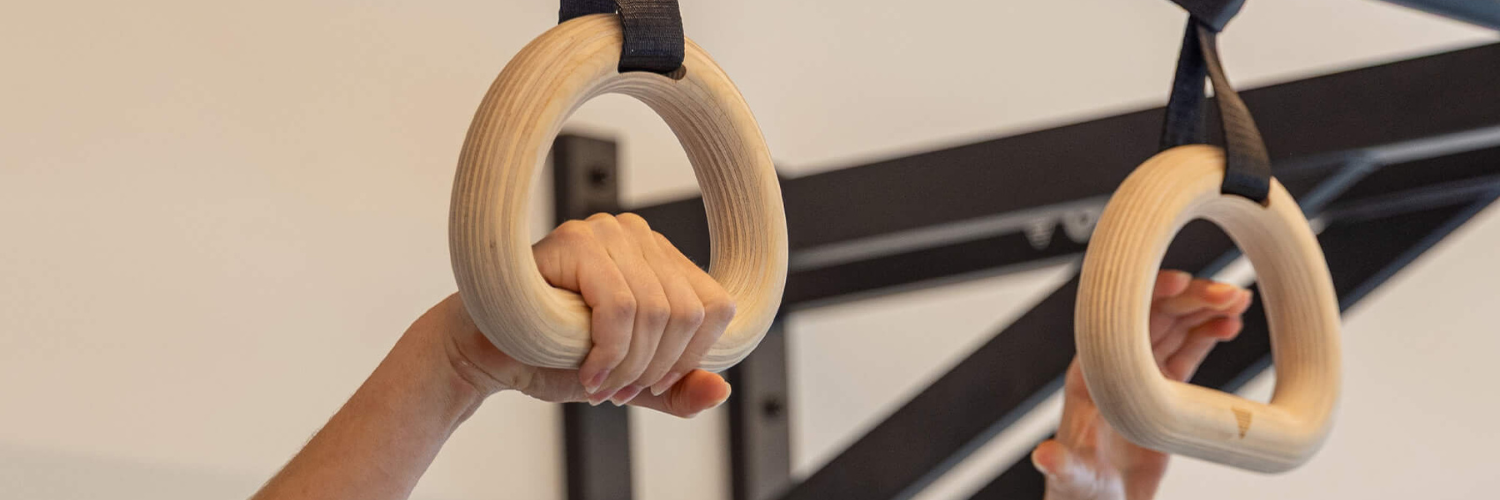
You can also pair your bar with resistance bands for assistance, gymnastic rings to vary angles, or browse the full pull up bar collection.

FAQ: Your Questions About Door Pull Up Bars
Can a door pull up bar damage my frame?
On GORNATION models, rubber ends spread the pressure and protect the wood from discoloration or scratches. The real risk comes from a weak or poorly fixed frame: always check it first.
What's the maximum weight a door bar can hold?
It depends on the model: 130 kg for the Hook-it, 150 kg for the Extend-it, 200 kg for the screw-mounted Uni. That limit includes your bodyweight plus any added load.
Can I do muscle ups on a door bar?
Hardly on a pressure model, due to limited clearance. For explosive movements, go for a bar with enough space such as the Uni, a wall bar or a station. Wide grip pull ups remain excellent preparation in the meantime.
How many pull ups should I do to progress?
Aim for a total of 30 to 50 reps per session, spread across sets well short of failure. Consistency beats occasional intensity every time.
I can't do a single pull up, where do I start?
Three tools: dead hangs for grip, band-assisted reps for the movement pattern, and controlled negatives. Within four to six weeks, the first full pull up usually shows up.
Can I install one in a rental?
Yes, that's its main strength. The Extend-it and Hook-it require no drilling and come off without leaving a trace.